REVIEW · TURIN
Flight Simulator INTERMEDIATE CRUISE 60 Mins
Book on Viator →Operated by IFly Simulator · Bookable on Viator
Stepping into a flight simulator always feels big. Here, you get the controls on the runway with the engines running, then fly the next 60 minutes with real cockpit systems in the mix. The setting is Turin, the vibe is hands-on, and the goal is simple: give you a serious taste of flying a commercial jet without the stress of doing it for real.
Two things I love right away are the full, working avionics and the physical realism of the force-feedback yoke tied to a hydraulic system. That combination makes the whole session feel more like piloting than pressing buttons.
One consideration: you won’t do the full “from zero” start-to-shutdown routine. Engine startup, taxi, FMC programming, runway alignment, and shutdown are not included, so this is best if you want the flying and procedures, not the whole ground workflow.
In This Review
- Key highlights you’ll care about
- Flying a Boeing-737-style cockpit in Turin for 60 minutes
- What you actually do: intermediate cruise, from runway to landing
- The cockpit realism: force-feedback yoke, hydraulic loading, and working avionics
- Route choice: full flight vs. procedures around the airport
- Instructor pilot guidance in English: how the session stays manageable
- The procedures you practice (and the ones you don’t)
- Value in Turin: is $215.32 worth it?
- Who this intermediate cruise session suits best
- Practical tips before you show up
- Should you book this Turin flight simulator session?
- FAQ
- How long is the Flight Simulator Intermediate Cruise experience?
- Where does the experience start and end?
- Is the session private?
- Is the experience offered in English?
- Do you get an instructor?
- What is included in the ticket?
- What is not included?
- Are cancellation and refunds flexible?
Key highlights you’ll care about
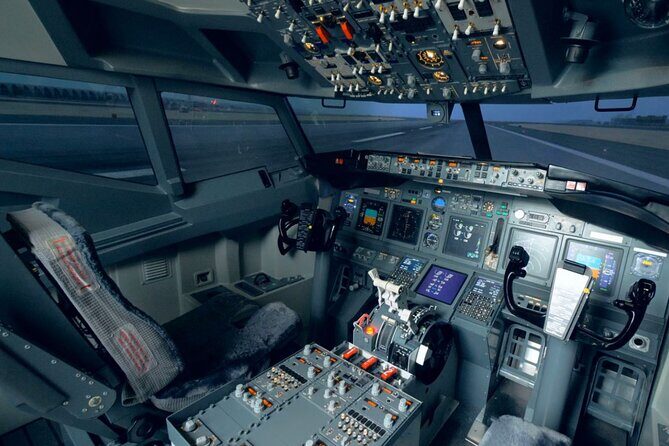
- Engines running and aligned before you take over, so you spend time actually flying
- 220-degree panoramic screen for a wide, real-world-like field of view
- Real instructor pilot right beside you, always in the moment with guidance
- Intermediate cruise focus with takeoff, climb, cruise, descent, approach, and landing procedures
- Route choice: fly a full route or fly multiple procedures around the departure airport
- Passenger seats available in the back of the cockpit (1–2 seats, depending on the ticket)
Flying a Boeing-737-style cockpit in Turin for 60 minutes
If you’re the type who likes learning by doing, this is a strong match. In this 60-minute intermediate cruise simulator session in Turin, you’re not just watching. You’re at the controls during the key moments: from takeoff, through climb and cruise, and all the way to approach and landing.
The “Turin” part matters because it keeps the day simple. You meet at Via Salbertrand, 77, 10146 Torino and the activity ends back at the meeting point. Near public transportation, this isn’t a whole-day production. It’s closer to a focused experience you can slot into a visit to the city.
Also, this is an English-offered activity and it’s private for your group. That matters for nervous first-timers. You’re not rushed by strangers, and the instructor can tailor explanations to your pace.
If you're still narrowing it down, here are other tours in Turin we've reviewed.


What you actually do: intermediate cruise, from runway to landing
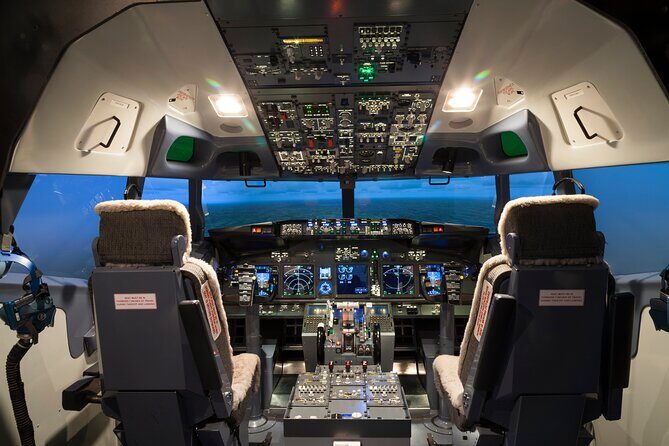
Here’s the practical breakdown of what you can expect once the session starts. The plane is already positioned on the runway with the engines running. After the operator’s takeoff briefing, you’ll be at the controls and responsible for the manoeuvres from takeoff to the initial climb.
From there, you get choices that affect how the time feels:
- You can fly an entire route (a longer, more continuous story).
- Or you can do several procedures around the departure airport (more “drills,” less “one long flight”).
Either way, the session covers the full flow of flying duties you’d expect in a commercial jet day: takeoff, climb, cruise, descent, approaching, and landing procedures. And the simulator ends with the aircraft still on the runway after landing, so you don’t get cut off mid-action.
One small but telling detail: you can fly in any weather. That’s not just a gimmick. It lets you practice how conditions change what you pay attention to, especially on the approach and landing phase.
The cockpit realism: force-feedback yoke, hydraulic loading, and working avionics
This is where the session goes beyond “cool screens.” The simulator uses full and working avionics, so the cockpit isn’t a prop. You’re interacting with systems that behave like the real thing—at least in the way they’re meant to be operated in this training-style format.
Then there’s the feel. The yoke has force-feedback control loading, supported by a real hydraulic system. In plain terms: the control response isn’t numb. You get physical cues that make the aircraft feel like it has mass and momentum, not like a video game.
Add the visuals: a 220-degree full panoramic screen. That wide view helps you understand why pilots care about sight lines—especially during climb and approach, where your scan pattern matters.
Finally, the cockpit setup is closely modeled to a 737-scale experience. One of the biggest reasons people rave about this format is that it doesn’t feel like a toy cockpit. It feels like the real workflow environment where your hands and eyes have responsibilities.
Route choice: full flight vs. procedures around the airport
The decision between a whole route and multiple procedures isn’t random. It changes what kind of learner you are.
If you want a story—takeoff, cruise, then the descent and approach—go for the entire route option. You’ll experience a more continuous rhythm. You’ll also get a chance to see how what you do earlier affects what you do later.
If you’re more interested in “learning the parts,” choose several procedures around the departure airport. That format tends to feel like repeated skill-building: adjust, stabilize, and practice the approach work with clear focus.
Either way, I like that you’re not boxed into one style. You can tailor the experience to your personality: do you want a flight you can remember as a single run, or do you want multiple practice moments in a shorter footprint?
Instructor pilot guidance in English: how the session stays manageable
A key value here is that you’re not solo with a learning curve. A real instructor pilot is always on your side, and that’s the difference between a “ride” and a learning experience.
You’ll start with a takeoff briefing. Then the instructor positions you at the controls for the main flying sequence. The best sessions I’ve seen like this are the ones where the instructor explains enough to help you succeed, but not so much that it becomes a lecture.
The instructors in this setup—people like Riccardo and Marco—are repeatedly praised for clarity and professionalism. In real-life terms, that translates into this: if you freeze or drift from the right idea, you’re guided back quickly, and you still stay in the cockpit doing the work.
If you bring a friend or partner (or if you want someone to watch), you can also sit with the cockpit view. The ticket includes 1–2 passenger seats in the back of the cockpit, which can turn the session into a shared experience rather than something you do in isolation.
The procedures you practice (and the ones you don’t)
Let’s be honest about what this experience covers and what it leaves out, because that’s what determines fit.
Included:
- Takeoff, climb, cruise, descent, approaching, and landing procedures
- The simulator is set up so you’re already past the hardest early “busywork” steps
- You have a real instructor pilot guiding you through the flow
- Passenger seating for 1–2 (depending on your ticket)
Not included:
- Engine startup procedure
- Flight plan compiling stage
- FMC programming
- Taxi and runway alignment
- Taxi to the gate and airplane shutdown
So if you’re hoping to learn everything from engine start through taxi to shutdown, this isn’t that session. It’s focused on the flying and the operational procedures around that core.
On the other hand, if your goal is to get stick time and learn what happens while the aircraft is moving through the air and the cockpit is busy, you’re in the right place. You skip the parts that can be time-consuming and you spend that time on the moments you came for.
Value in Turin: is $215.32 worth it?
At $215.32 per person for about one hour, the question isn’t just the dollar figure—it’s what you’re getting for that hour.
You’re paying for:
- A real instructor pilot always present
- Full avionics and realistic cockpit controls
- The setup that starts you with engines running and already aligned, so you don’t waste your session time
- A 220-degree visual field and physical yoke feedback
- The chance to fly either a full route or multiple procedures in one go
A cheaper option might exist in other simulator categories, but you’d likely lose something essential: working systems, instructor time, or the “in-the-cockpit” realism that makes you take it seriously.
If you want a strong “learn by controlling” aviation experience, this price is easier to justify. If you only want a quick thrill and you’re not interested in procedures or guidance, you might decide you’d rather do something less technical.
Who this intermediate cruise session suits best
This is ideal for people who:
- Want an aviation experience that is procedural, not just scenic
- Like structured guidance from a professional in the cockpit
- Are comfortable being taught while operating real-feeling controls
- Want to experience a commercial jet cockpit workflow in English
It’s also a great birthday or couples activity. Some sessions have been described as a father-and-son cockpit moment, and the passenger seating makes it possible for loved ones to be part of the experience without taking the controls.
If you’re a complete newbie, it can still work well because the instructor is beside you. But remember: it’s labeled intermediate cruise, so you should expect that you’re learning within a real flight phase, not starting from the very first engine steps.
Practical tips before you show up
A few simple things will help you get more out of your hour.
First, wear something you can move in comfortably. You’ll be using the controls consistently and you’ll likely lean forward to monitor instruments.
Second, treat the instructor’s guidance like training, not trivia. Ask what you should focus on during the next segment: what to stabilize, what to watch, and why.
Third, decide beforehand how you want to use your time:
- One full route if you want a complete flight arc.
- Multiple procedures if you want practice and repetition.
Finally, if you’re bringing passengers, remember the value is shared attention. Even sitting in the cockpit back seats, you’ll be close enough to understand what’s happening.
Should you book this Turin flight simulator session?
I’d book it if you want the most realistic “in-command” experience you can get for a short visit to Turin. The combination of working avionics, force-feedback controls, and a real instructor pilot keeps it practical. The fact that you skip startup and taxi also means your hour stays focused on flying and procedures.
Don’t book it if your dream is a full end-to-end operational training session starting with engine start, taxi, and shutdown. This setup intentionally concentrates on the airborne and approach/landing phases.
If your goal is to feel the cockpit work—controls, instruments, and real pilot-style tasks—then this $215.32, 60-minute intermediate cruise is a smart use of time in Turin.
FAQ
How long is the Flight Simulator Intermediate Cruise experience?
The experience lasts about 1 hour.
Where does the experience start and end?
It starts at Via Salbertrand, 77, 10146 Torino TO, Italy, and it ends back at the same meeting point.
Is the session private?
Yes. It is a private tour/activity, so only your group participates.
Is the experience offered in English?
Yes, it is offered in English.
Do you get an instructor?
Yes. A real instructor pilot is always on your side.
What is included in the ticket?
Included are takeoff, climb, cruise, descent, approaching and landing procedures, and the plane is already set up with engines running and aligned for the runway in use. The ticket also includes 1 or 2 passenger seats in the back of the cockpit.
What is not included?
Not included are engine startup, flight plan compiling, FMC programming, taxi and runway alignment, taxi to the gate, and airplane shutdown.
Are cancellation and refunds flexible?
Free cancellation is available. You can cancel up to 24 hours in advance for a full refund. If you cancel less than 24 hours before the start time, the amount paid is not refunded.