REVIEW · TURIN
Turin, Explore the city in a Walking guided tour
Book on Viator →Operated by Keys of Italy · Bookable on Viator
Turin can feel like a puzzle until you see it on foot. This 2-hour guided walk is built for getting your bearings fast, with a focused route through the city center. I really like the small group size (max 9), which keeps the pacing calm and the questions real.
You’ll also get a clear thread through time, from Roman traces to the city’s later landmarks, explained stop by stop.
The main drawback is simple: this is mostly outside, and several major sights list admissions not included, so you’ll want to decide ahead of time what’s worth paying for if you want interior time.
In This Review
- Quick takeaways before you go
- A 2-hour Turin walk that gives you real bearings
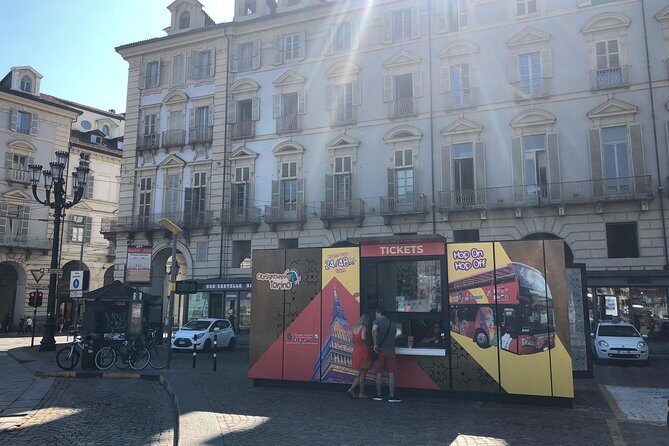
- Piazza San Carlo: Turin’s grand lounge
- Piazza Carignano: a Savoy-era square with a political heart
- Piazza Castello: the center where palaces take over the view
- The cathedral area and the Renaissance clue at San Giovanni Battista
- Porta Palatina: a Roman gate you can actually read
- Mole Antonelliana: the tower that later became a cinema icon
- How the pacing works (and how to get the most from it)
- Price and value: what $78.17 buys you in real life
- Who this walking tour is best for
- Should you book this Turin walking tour?
- FAQ
- How long is the Turin walking tour?
- What is the price per person?
- Where does the tour start and end?
- Which landmarks are included in the route?
- Are admission tickets included?
- How large is the group?
- Can I get a full refund if I cancel?
- Is it easy to reach the meeting point by public transportation?
Quick takeaways before you go
- Small group feel: capped at 9 people for a more intimate pace
- Prime central starting point: Piazza San Carlo, easy to orient yourself right away
- Top sites in 2 hours: major squares, Roman Porta Palatina, and the Mole Antonelliana area
- Guided historical connections: a timeline from the Roman era through today
- Some entrances cost extra: plan around what is marked as admission not included
- Tour keeps moving even for solo schedules: it proceeds even if you’re the only participant
A 2-hour Turin walk that gives you real bearings
If you only have a little time in Turin, a walking tour like this does something most solo sightseeing can’t: it connects the dots. You start in the famous grand plaza zone and move outward in a tidy loop through the city’s most recognizable civic and religious spaces.
This route is designed in clean chunks. Each stop is roughly 20 minutes, so you get time to look up, read the details, and absorb what you’re seeing without burning your entire day. That timing matters in Turin, where the best moments are often visual: façades, proportions, and street-level clues you notice only when someone points them out.
You’ll walk between places that help you understand how Turin thinks of itself. The city balances elegance and authority (big squares and palaces), faith and identity (the cathedral area), and even surprise ambition (a huge tower that later became a cinema landmark).
Other guided tours in Turin

Piazza San Carlo: Turin’s grand lounge
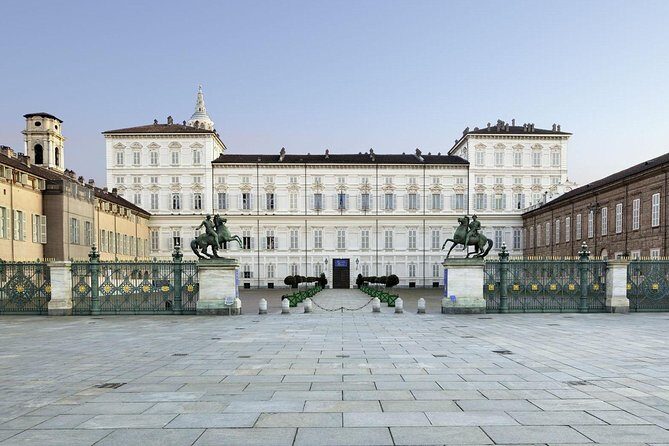
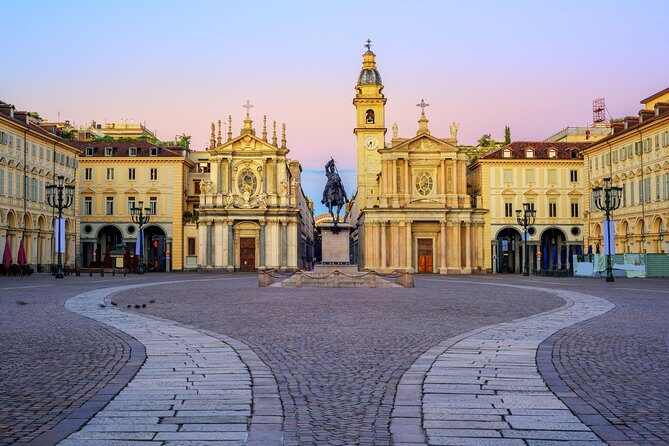
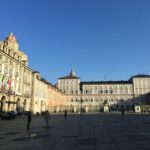
You begin at Piazza San Carlo, and the first thing you notice is how intentionally it’s composed. The plaza is massive, but it doesn’t feel chaotic. It works like a stage: buildings frame the space, and the open area makes it easy to take in the scale.
One detail I’d watch for is the way the plaza’s elegance is credited to Carlo di Castellamonte, with work beginning in 1619. That’s the kind of info that changes how you look at architecture. Instead of just seeing a pretty square, you start noticing planning—how the space was shaped to be used.
Practical tip: since this is your start point and you’ll likely be gathering, arrive a few minutes early so you aren’t rushing when the group forms. And keep your phone handy for skyline photos, because the rest of the tour keeps pulling your gaze upward.
Piazza Carignano: a Savoy-era square with a political heart
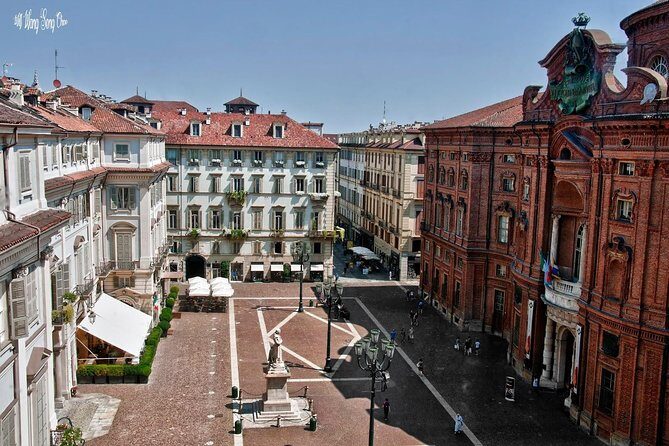
Next comes Piazza Carignano, one of the most important historic squares of Turin’s Piedmontese capital identity. The background here is tied to urban expansion, credited to the vision of Vittorio Emanuele I of Savoy.
This square is rectangular, and that shape is part of why it feels so formal. In the center, there’s a monument made in honor of Vincenzo Gioberti, a name you might recognize later if you start reading more about Italian intellectual and political life.
Here’s the real value for you: this stop helps you understand Turin as a city of governance and culture, not only as a place of museums and viewpoints. The guide’s job is to connect the look of the square to the story of who wanted it, who funded it, and what they hoped it would communicate.
Piazza Castello: the center where palaces take over the view
At Piazza Castello, you step into the physical idea of Turin’s center. It’s a large rectangular esplanade, and your attention naturally goes to the landmark cluster around it.
The first visual hit is Palazzo Madama. It’s the kind of building that makes you want to walk closer just to study the façade. Then your gaze shifts to the Palazzo Reale frontage—because the squares around these palaces aren’t just open space. They’re designed viewpoints.
A small caution: Piazza Castello is a big open area, so your photos will depend on your timing. If you’re sensitive to crowds or want sharper shots, aim for the period when the group is moving and you’re not trapped between other sightseeing clusters.
This stop is also a great “orientation checkpoint.” If you’re going to understand the rest of Turin, you’ll feel the pattern here: official buildings + deliberate street-level sightlines.
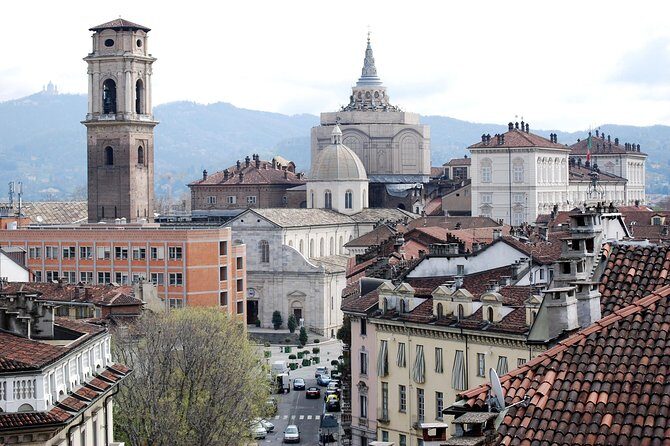
The cathedral area and the Renaissance clue at San Giovanni Battista
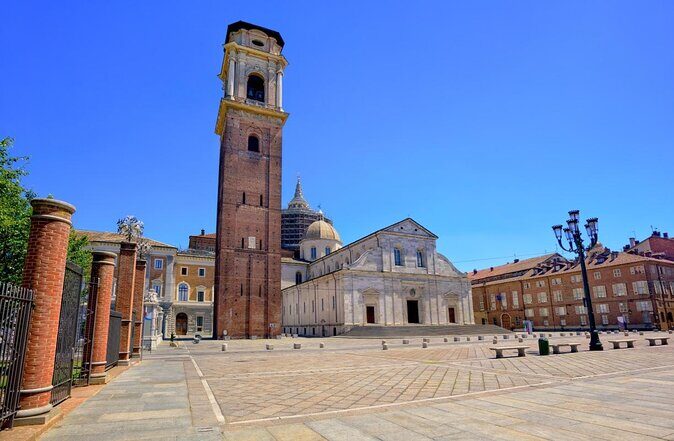
Then you reach the Cappella della Sacra Sindone area, within the broader metropolitan cathedral of San Giovanni Battista. This is the main Catholic worship center in Turin and the cathedral of the archdiocese.
What matters most for your visit is the architectural note: it’s described as a Renaissance-style religious building, and specifically as the only Renaissance-style religious building in the city. If you like architecture, this is a strong reason to pay attention rather than treat it as a quick photo stop.
Also, don’t think of this as only about one chapel. It’s a gateway into how Turin frames its religious identity. The guide’s explanation helps you connect the outside presence of the cathedral square with why this site became so central to the city’s spiritual and cultural life.
If you’re planning your day around interiors, keep in mind the tour marks admission here as not included, so you’ll want to decide whether you’ll do any paid access on your own before or after the tour.
Other city tours we've reviewed in Turin
Porta Palatina: a Roman gate you can actually read
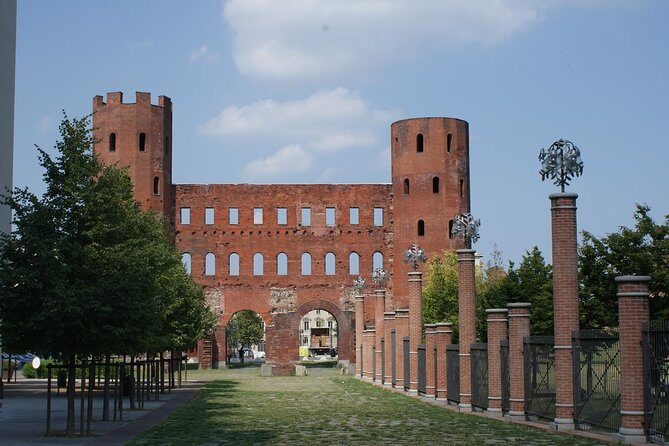
Now you get the time-travel moment at Porta Palatina, dated to the 1st century AD. The description calls it one of the best preserved Roman gates in the world, and you can see why: it’s not a vague ruin. It’s a structure you can approach and look at closely.
What I’d focus on here is the street-level storytelling. The stones show furrows from carriages—a small detail that turns the gate from a historic image into something physical. You’re standing near evidence of everyday movement, not just monuments.
This is also where the tour’s “more than two thousand years” idea becomes real for you. You’re not only hearing that Turin has old layers—you’re looking at one.
Admission note: this stop also lists admission not included, so the value is mostly in the viewing and explanation rather than entry fees.
Mole Antonelliana: the tower that later became a cinema icon
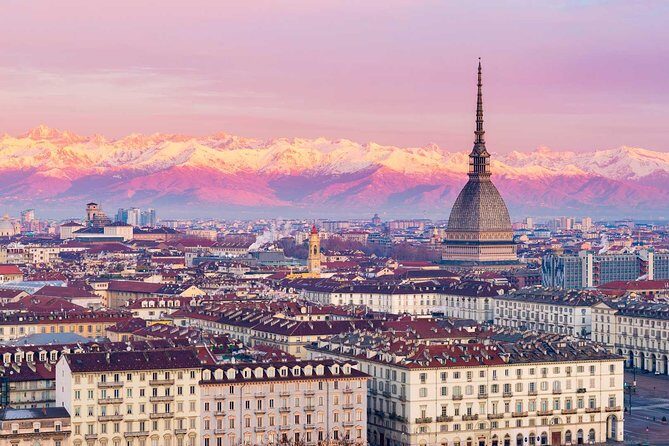
The grand finish is Mole Antonelliana, Turin’s most dramatic skyline marker. It rises to 167 meters, and it was built in 1863 by architect Alessandro Antonelli.
The story is the fun part: it was originally designed as a place of worship for Turin’s Jewish community. Then it was sold to the municipality in 1877, and today it houses the National Cinema Museum.
This stop is perfect for people who like landmarks with a twist. The tower isn’t only an object to photograph—it’s a timeline in stone, showing how a city repurposes big ideas as its needs and identities change.
If you want more than a skyline view, note that the tour lists admission not included for this stop too. Still, you’ll end in the right neighborhood, near the museum area, so you can easily decide what to do next.
How the pacing works (and how to get the most from it)
A tour like this succeeds or fails based on pacing, and here it’s built around that 2-hour structure. Roughly six major stops means you’re not stuck at one place for long. You get a rhythm: look, listen, orient, move.
That rhythm is also why it works well for first-time visitors. You’re not just collecting photos. You’re collecting context:
- the civic squares help you understand Turin’s public identity
- the cathedral area helps you understand the city’s faith anchor
- the Roman gate gives you an immediate, tangible ancient layer
- the Mole gives you the modern landmark punch
My practical advice is to wear comfortable shoes and keep your water nearby. The tour is short, but Turin’s center streets can involve uneven pavement and lots of walking between plazas.
Also, the route starts at Piazza San Carlo and ends near the National Museum of Cinema (Via Montebello, 20). That’s handy because it doesn’t dump you somewhere random. You finish where you can naturally continue with museum time if you want it.
Price and value: what $78.17 buys you in real life
At $78.17 per person for about 2 hours, this isn’t a “buy a ticket, wander alone” deal. You’re paying for a guided route that keeps the city center organized for you.
Here’s the value logic I’d use:
- Small group cap (max 9) helps you get more of the guide’s attention. That’s usually what separates a fun walk from a forgettable one.
- You’re also getting a tightly planned selection of major sights in a short window. If you tried to DIY that loop without help, you’d likely lose time figuring out what to prioritize and why each place matters.
- Several stops explicitly say admission not included, which is fine. It means you’re mostly paying for interpretation and orientation, not paying for entry fees at every stop.
One more point from the experience format: the tour is designed to keep running even when the group is very small. That matters when you’re traveling and don’t want your plans to hinge on perfect numbers.
Who this walking tour is best for
This is a great match if:
- you want a first overview of Turin’s center without spending a whole day
- you like seeing architecture in a guided order, not just in a scattered photo run
- you’re curious about layers of time, from Roman to later identity markers
- you prefer a small group rather than a large bus-style crowd
It may be less ideal if you’re the type who expects major museum interior time in a 2-hour window. The route is concentrated on stops and viewpoints, and entry fees are marked as not included at multiple landmarks.
Should you book this Turin walking tour?
I think you should book it if you want your Turin trip to start with clarity. This walk gives you a smart, center-focused route, plus enough explanation to make the squares and landmarks feel connected rather than random.
The biggest reasons I’d choose it:
- small group size for a more personal pace
- a route that hits the big visual anchors—Piazza San Carlo, Piazza Castello, Porta Palatina, and the Mole Antonelliana
- strong practical momentum: it’s built to keep your plan intact even when the group is tiny
If you’re mainly looking to buy museum tickets and spend the day indoors, you might pair this tour with later self-guided museum time. But as an introduction and orientation, this is one of the most efficient ways to understand Turin’s shape and story.
FAQ
How long is the Turin walking tour?
It lasts about 2 hours.
What is the price per person?
The price is $78.17 per person.
Where does the tour start and end?
It starts at Piazza San Carlo (P.za S. Carlo, Torino TO, Italy) and ends at the National Museum of Cinema (Via Montebello, 20, 10124 Torino TO, Italy).
Which landmarks are included in the route?
The tour includes Piazza San Carlo, Piazza Carignano, Piazza Castello, the Cappella della Sacra Sindone / San Giovanni Battista cathedral area, Porta Palatina, and Mole Antonelliana.
Are admission tickets included?
Admissions are marked as not included for several stops. Piazza Carignano is listed as free, while others note admission tickets not included.
How large is the group?
This tour has a maximum of 9 travelers.
Can I get a full refund if I cancel?
Yes. You can cancel for a full refund if you cancel at least 24 hours before the experience’s start time.
Is it easy to reach the meeting point by public transportation?
The tour notes that it is near public transportation.
If you want, tell me your travel dates and whether you’re more into Roman sites, cathedral architecture, or the cinema museum—then I’ll suggest a simple plan to pair this walk with what’s most worth your time.