REVIEW · TURIN
Walking around Turin with a local guide
Book on Viator →Operated by Luisa Boscolo Guida Turistica · Bookable on Viator
Turin works best when you understand its layout fast. This short walking tour takes you straight to the city’s big public spaces with a licensed local guide. I especially liked the small-group feel (max 20) and the way the guide connects what you see—cafes, theaters, and Roman leftovers—to what it meant for Turin over time.
The one thing I’d flag is language fit. The tour is offered in English, but guide comfort can vary from person to person, so if you need very polished English, be ready to ask questions and steer the conversation.
In This Review
- Key things to know before you go
- Getting oriented fast: why Turin’s squares are the whole story
- Piazza San Carlo: Turin’s “living room” and its café power
- Piazza Carignano: parliament beginnings, baroque drama, and theater energy
- Piazza San Giovanni and the Duomo area: layers from Roman to Renaissance
- How a licensed guide changes the walk (especially when you have questions)
- Price and value: what $51.61 buys you in the real world
- Practical tips for making this walk feel easy
- Should you book this guided walk?
- FAQ
- FAQ
- How long is the walking tour in Turin?
- What does the tour cost?
- Where does the tour start and end?
- What languages are available for the guide?
- Are entrance tickets included for the stops?
- How big is the group?
- Is it easy to get to the meeting point?
Key things to know before you go
- 2 hours of walking that targets major squares, so you get orientation without a full-day commitment.
- Free-to-view stops: each of the three stops is listed as admission-free, with a focus on what you can see from the piazzas.
- Licensed guide with language options (Italian, English, or French).
- Small group: capped at 20 travelers, which helps you actually hear and ask questions.
- Starts and ends at Piazza Castello, so you’re not stranded in the middle of nowhere after the walk.
Getting oriented fast: why Turin’s squares are the whole story
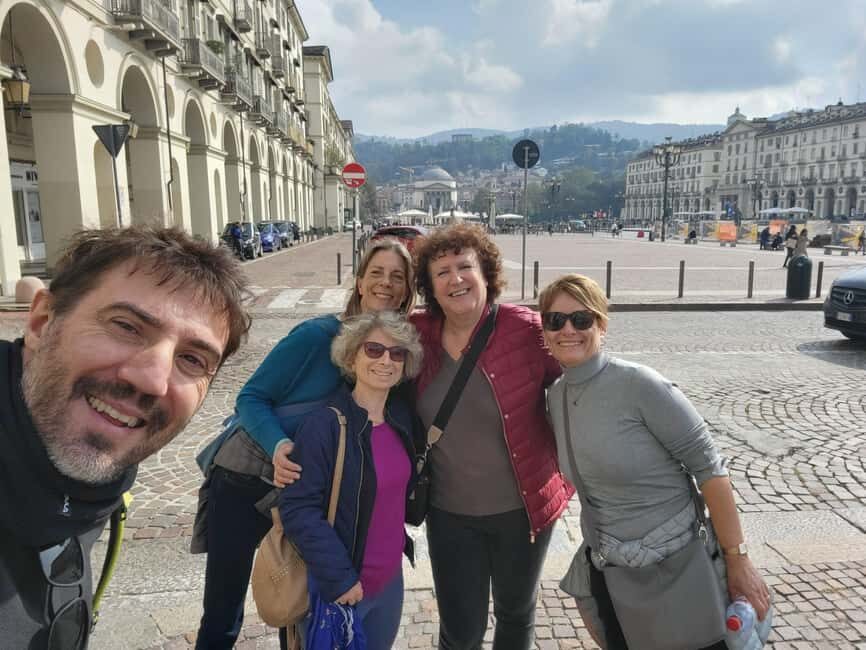
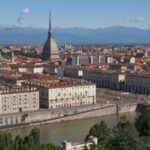
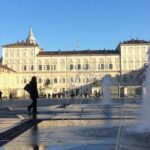
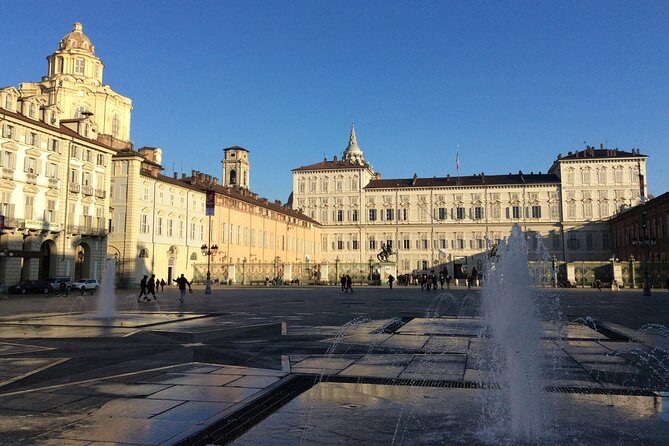
If you only have a day (or even just a half-day), Turin can feel spread out. This walk is a smart way to make the city click. You start in Piazza Castello and move from one iconic square to the next, using the public spaces as your map. That matters because Turin’s landmarks often work best as you look out from a piazza—buildings, sightlines, and street life all line up together.
The timing is also realistic. At around 2 hours, you won’t get stuck doing “museum errands.” Instead, you’ll spend your energy on viewpoints and explanations. And because the group is capped at 20, the guide can keep things moving while still answering questions—especially helpful if you’re traveling with family or someone who prefers a steadier pace.
One more practical win: the stops are described as admission-free. So you’re not forced into last-minute ticket decisions during the walk. That’s ideal when your goal is to understand the city first, then decide later if you want to add interiors on your own.
Other private tours with a local in Turin & Piedmont
Piazza San Carlo: Turin’s “living room” and its café power
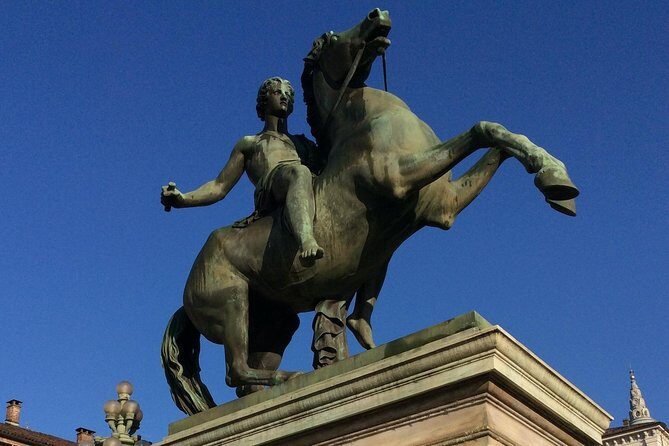
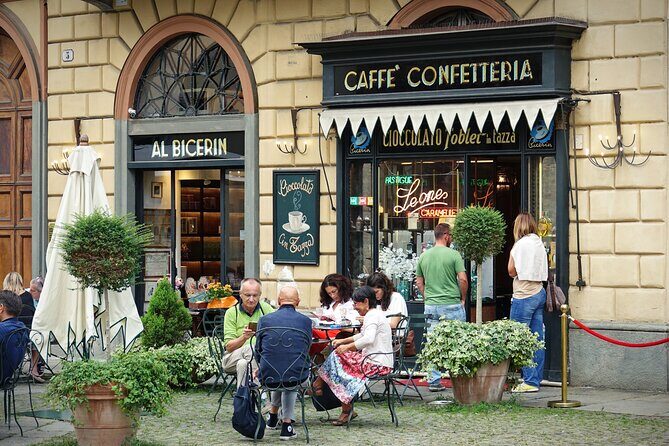
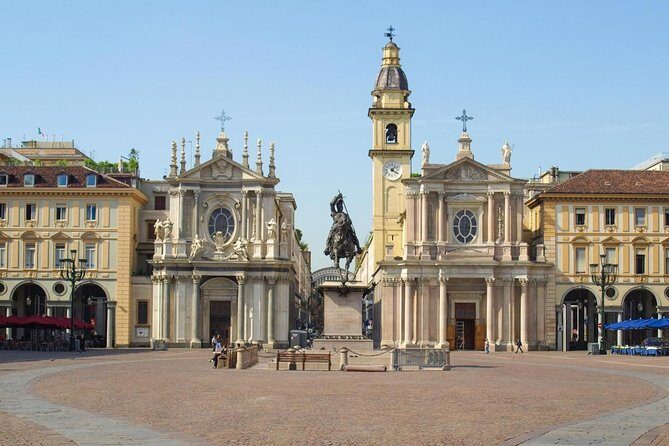
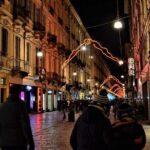
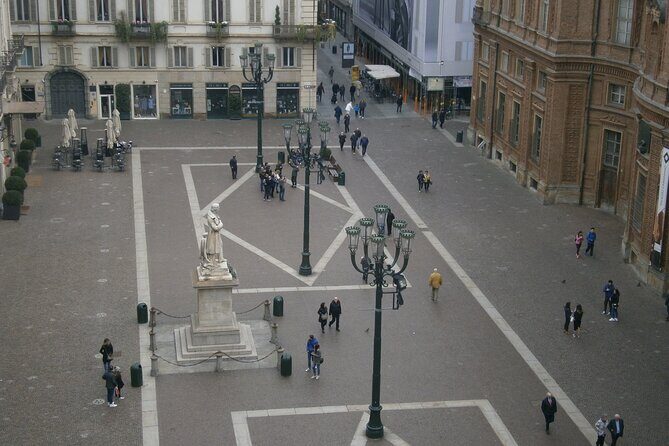
Piazza San Carlo is the kind of place you can see from a distance and still want to stop anyway. It’s the Turin living room, and you feel that right away. The square is framed by elegant historic cafés, so it’s both a visual centerpiece and a real social hub. People come here to sit, watch, and linger.
This stop is scheduled for about 30 minutes, which is perfect. You don’t just “pass through.” You get time to absorb the atmosphere and the significance. The square is also described as the economic and financial heart of the city, which changes how you read the streets around it. When a guide points out that this is where business life shaped Turin, you start noticing details that you’d otherwise miss—how the cafés face inward, how the square functions like a stage, and why it became such a natural gathering point.
What I’d do with this stop: keep your phone camera ready, but don’t treat it like a photo stop only. Sit for a few minutes if you can (even just to people-watch). You’ll get a better sense of how Turin relaxes compared to cities that run purely on tourist crowds.
Potential drawback to plan around: if you’re expecting this tour to be mostly “inside places,” you might find it more street-and-building focused. Piazza San Carlo is all about the square experience—great for orientation, not for big indoor-ticket moments.
Piazza Carignano: parliament beginnings, baroque drama, and theater energy
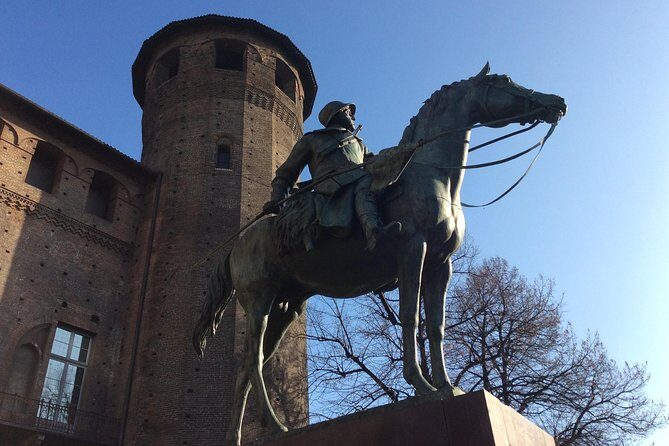
Next comes Piazza Carignano, and it’s a different vibe. Where San Carlo feels like refined daily life, Carignano feels more political and theatrical. The square looks out onto the famous Teatro Carignano, and it also ties to the baroque palace seat of the first Parliament. That combination is a big reason Turin stands apart from other Italian cities—you get the sense of civic power placed right next to culture.
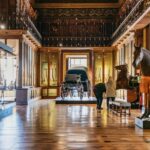
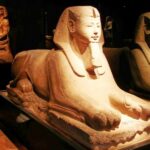
You’ll have about 45 minutes here, which gives the guide enough time to walk you through the meaning of the architecture without turning it into a lecture. The square also lets you spot several major “you should know this” landmarks from the outside, including the Ristorante del Cambio and the Egyptian Museum. Even if you don’t enter them on this walk, you’ll at least understand their neighborhood context. That makes it easier to plan later.
Here’s what you can do during this portion to get more out of it:
- Look at the square as a viewing platform. The guide’s comments help you notice angles and alignments between buildings.
- Take mental notes for later: if you feel like you want food in an old-school setting, or you want museum time, this is where you’ll know where to return.
Possible consideration: since this is a walking tour with free-to-view stops, you may not get the full interior experience you’d get from a dedicated theater tour or a museum ticket day. If you strongly prefer interiors, pair this with a separate visit later when you’re rested and ready to queue.
Piazza San Giovanni and the Duomo area: layers from Roman to Renaissance
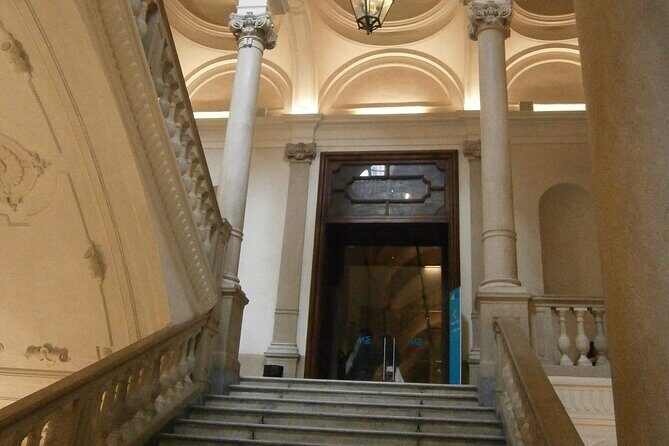
The final stop is Piazza San Giovanni, centered on the Renaissance Piazza del Duomo area. This is where Turin’s time layers show up in one glance. You’re looking at a place where different eras overlap, and the guide helps you sort out what belongs to which period.
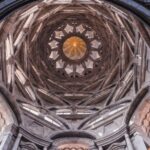
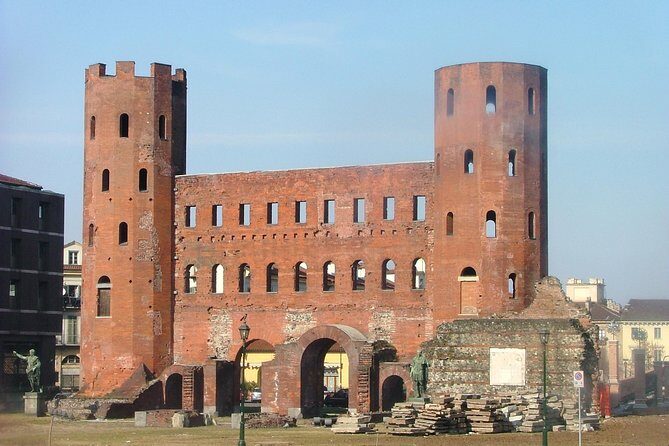
Highlights mentioned for this stop include the Chapel of the Shroud, the Porta Palatina, and the Roman theater. That’s a powerful mix, because it signals Turin isn’t just “medieval Italy.” It’s a city with Roman remains close to major Renaissance religious and civic life. When the guide points out each element, the area stops being intimidating. You start seeing it as a sequence: Roman foundations, Renaissance shaping, and later Turin identity.
You’ll spend about 1 hour at this stop, which is generous for the amount of material covered. This is the part where a lot of people slow down naturally. There’s plenty to look at, and the guide’s explanation helps you read the space instead of just photographing it.
What I like most about this section: it gives you a reason to come back later. Even if you don’t go inside anything right now, you’ll know what to prioritize if you decide to add entrances on another day. That’s travel value you can feel—less wandering, more purposeful choices.
How a licensed guide changes the walk (especially when you have questions)
The real payoff here is the guide’s ability to make a route feel like a story. A licensed guide isn’t just naming places. They connect them: why this square became important, why the theater matters, why Roman remnants still sit in your line of sight.
Luisa Boscolo is specifically named as the experience provider, and her style comes through in the way the tour is described as a good fit for different groups. One key theme from the feedback is that she adapts when needed—such as when traveling as a family or with seniors who want a tour that works with their pace and comfort. That’s not a small detail. In a short 2-hour walk, pacing matters because you want everyone to enjoy it, not just “survive” it.
The other practical side: with a group size of up to 20, you typically can ask things without getting ignored. This is where you can steer the tour toward what you care about most—food culture, political Turin, or how the Roman pieces fit into the city.
Language consideration, stated plainly: the tour is offered in English (and also Italian/French), but if fluent English is critical for you, it’s smart to pay attention on the day—ask a question early to see if the guide’s delivery matches your expectations. When language doesn’t land, it can turn a great walk into a frustrating one.
Other guided tours in Turin


Price and value: what $51.61 buys you in the real world
At $51.61 per person for about 2 hours, this is priced like a solid city-orientation experience—especially because it includes the guided commentary. The stops are described as admission free, and the walking format means you’re not spending a lot of time queuing.
What makes the value feel right is the combination:
- Time efficiency: you’re covering three major areas without needing to plan connections between them.
- Licensed guidance: you get context that’s hard to piece together quickly on your own.
- Sight-focused itinerary: you’re not paying for a bunch of separate attractions inside this specific tour.
Also, it’s booked fairly far in advance on average (around 63 days). That’s often a sign the experience fits a common need: first-time visitors, short-stay travelers, and people who want their bearings quickly. If you’re traveling in high season or on a popular day, booking earlier is a good habit.
And one more value point: you get an end-to-end path that returns you to Piazza Castello. That matters if you want a smooth transition to lunch, an aperitivo crawl, or your next reservation.
Practical tips for making this walk feel easy
This is a walking tour, so keep it simple:
- Wear comfortable shoes. Turin’s center is very walkable, but you’re on your feet for the full 2 hours.
- Bring a bottle of water, especially if you visit on a warm day. You’ll want it during pauses for photos and explanations.
- Expect mostly outdoor viewing. The stops are piazzas and exterior-focused, even though the area includes major attractions.
If you’re coming in with specific interests, this is how you get more out of it:
- Want culture and power? Pay attention at Piazza Carignano and ask about how Turin’s civic life shaped its architecture.
- Want layers of time? Spend extra moments at Piazza del Duomo and take cues from the Roman and Renaissance points the guide highlights.
- Want an easy first-day plan? Use this tour as your “map builder,” then decide later if you want deeper museum or interior visits.
Meeting at Piazza Castello is convenient because it’s central. Ending there keeps your day coherent instead of dumping you somewhere far from your next stop.
Should you book this guided walk?
I think you should book it if you match one of these situations:
- You’re in Turin for a short time and want a fast, smart overview.
- You prefer walking routes where the guide helps you read what you’re seeing.
- You want a tour that fits families and mixed ages, including people who may not want a long, strenuous day.
I’d skip or pair it differently if:
- You’re hoping for a tour that’s mostly museum interiors and paid attractions inside the same 2-hour window.
- You need extremely advanced language delivery and don’t want any chance of mismatch on an English day. In that case, plan your expectations carefully and keep your questions ready.
FAQ
FAQ
How long is the walking tour in Turin?
It runs for about 2 hours.
What does the tour cost?
The price is $51.61 per person.
Where does the tour start and end?
It starts at Piazza Castello in Turin and ends back at the meeting point.
What languages are available for the guide?
The guided tour is offered in Italian, English, or French by a licensed professional guide.
Are entrance tickets included for the stops?
Entrance tickets and anything not expressly indicated are not included. The three listed stops are described as free admission ticket, and the tour focuses on what you can see at each square.
How big is the group?
The tour has a maximum of 20 travelers.
Is it easy to get to the meeting point?
Yes. The meeting point is near public transportation, and service animals are allowed.
Should you book this tour? Yes—if you want a fast, guided way to understand Turin’s key squares without spending your day on ticket lines. It’s a strong “first steps in the city” move, and it sets you up to explore deeper on your own right after.