Turn Turin into a puzzle trail.
This outdoor escape-game style walk is interesting because you move at your own pace with step-by-step phone directions, not a human guide dragging you around. I also like that it is designed as a safe, no-crowds activity since you only need your phone and can play without face-to-face contact. One thing to consider: if your phone has trouble activating the game, you’ll be stuck until support helps fix it.
You start in the center and end at another landmark, with clues that keep you moving between stops. If you want a sightseeing day that feels more like a treasure hunt than a lecture, this is a fun fit. It runs through key spots like Piazza Statuto, the Santuario della Consolata, the Roman Palatine Gate, and Ponte Vittorio Emanuele I in about 90 minutes.
In This Review
- Key points to know before you play
- A phone-led spooky trail through Turin
- Price and time: what $8.11 buys you
- How the game flow keeps you moving
- Stop 1: Piazza Statuto and the Black Heart clues
- Stop 2: Santuario della Consolata (La Consla) mystery
- Stop 3: Rondò della Forca and Turin’s esoteric crossroads
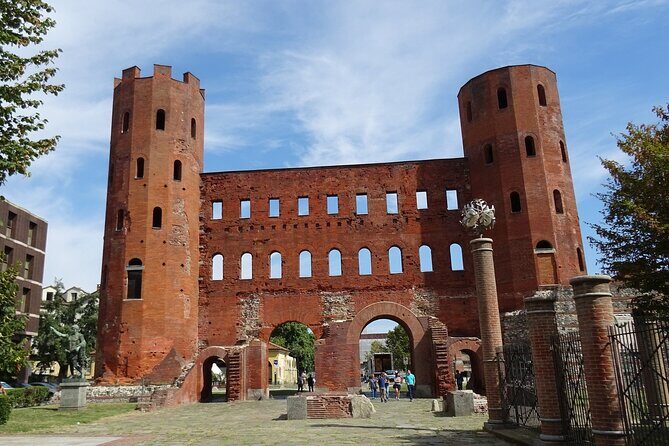
- Stop 4: The Palatine Gate and the Roman layer
- Stop 5: Madama Palace and ducal widows
- Stop 6: Piazza Castello and the city’s museum energy
- Stop 7: Palazzo Trucchi di Levaldigi and the massive door
- Stop 8: Piazza San Carlo and the baroque layout
- Stop 9: Via Po arcades and Caffè Fiorio area
- Stop 10: The 1648–1656 church details stop
- Stop 11: Ponte Vittorio Emanuele I and the finish line
- The one big risk: phone activation issues
- Who this is best for (and who should pass)
- Should you book Ghosts of Turin?
- FAQ
- What is the duration of Ghosts of Turin: Hidden Spell Exploration Game?
- How much does it cost per person?
- Where do I start and end the game?
- Do I need an internet connection during the walk?
- Can I start at any time and pause during the game?
- Is there a physical tour guide with this experience?
- Is this experience available every day?
- What if I cancel my booking?
- Is this tour private and accessible for different travelers?
Key points to know before you play
- Self-guided, no guide needed: You follow instructions on your phone and complete challenges on your own schedule.
- No need to get lost: Directions between stops are built into the app flow.
- Offline play while exploring: You don’t need mobile data during the walk.
- Flexible timing: It is available essentially all day (12:00 AM to 11:30 PM), and you can start whenever you like.
- A short loop of big sights: Roman remains, royal-era squares, and bridge views in roughly 1.5 hours.
A phone-led spooky trail through Turin
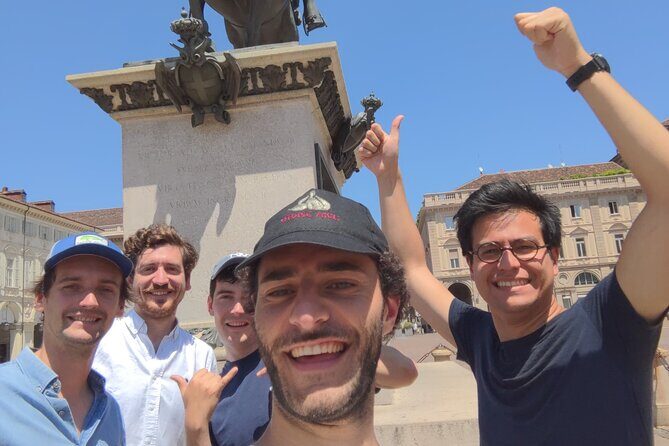
This is not your standard “walk, look, listen” tour. It is built like an outdoor game where you read clues on your smartphone and hunt for answers around each stop. The setting is Turin, but the structure feels like a treasure hunt: you solve, then move on to the next location.
The biggest practical win for me is the way the app handles movement. You are guided step by step from the start point to the finish point, so you are not trying to match a map to a foggy memory of what you saw two minutes ago. Add in the fact that it’s private (only your group), and the experience stays calm instead of turning into a crowd-control exercise.
That said, you are responsible for your own tech. You’ll want a charged phone and enough time to get the game running before you walk too far.
Other underground and hidden Turin tours

Price and time: what $8.11 buys you
At about $8.11 per person for around 1 hour 30 minutes, you are paying for flexibility and convenience as much as sightseeing. Since there’s no human guide included, that price is really about the app experience plus the planned route.
This can be excellent value if you like doing activities where you can pause, restart, and keep going. It is also a good budget choice if you want to “spice up” a normal day in the city center without paying for multiple paid attractions.
If you are the type who wants someone to explain what you’re seeing, you may feel the lack of commentary. The game does teach stories and mysteries tied to each stop, but the format is challenge-first rather than narrative-first.
How the game flow keeps you moving
Here is what you can expect from the structure: each stop has a local story, then a challenge that asks you to look around and find the answer. When you get it right, you advance to the next location. The idea is that you are doing slow, purposeful looking—like you’re investigating the city instead of just passing through it.
The route is designed around a sequence of recognizable landmarks. You begin at Piazza Statuto and end at Ponte Vittorio Emanuele I. Along the way, you’ll visit a mix of religious, Roman, and baroque-era sites, plus squares and streets that make Turin feel like Turin.
Because it is described as safest and avoids human contact, it also works well if you prefer not to coordinate with a group. It is open basically all day (12:00 AM to 11:30 PM), so you can pick a time that matches your energy.
Stop 1: Piazza Statuto and the Black Heart clues
Your starting point is Piazza Statuto, and the game sets a dark tone right away. The square was linked to a Roman necropolis, a French execution site, and a terrible fire in 1983. The central fountain is also tied to tragedy: it was built in memory of workers who died digging the Frejus Rail Tunnel.
The game calls this area Turin’s Black Heart in spirit, because the place carries so much fatal legacy. That theme matters because it trains you to look at details you might otherwise ignore—signs, plaques, and physical features that help you answer the challenge question.
Practical tip: Piazza Statuto is a big, central square. Give yourself a few minutes at the start to get your phone ready and orient yourself before you begin scanning for clues.
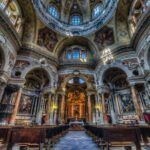
Stop 2: Santuario della Consolata (La Consla) mystery
Next you move to Santuario della Consolata, also known by the more casual name La Consla. The sanctuary is described as a prominent Marian sanctuary and minor basilica, sitting at the intersection of Via Consolata and Via Carlo Ignazio Giulio.
In the game format, this stop is less about admiring from a distance and more about reading what’s around you and answering the prompt. Places like this work well for a smartphone game because they usually have visual cues—architecture, inscriptions, and notable features—that make “look closely” feel natural.
One small consideration: church areas can be quiet and sometimes busy depending on time of day. You’ll still be moving on your own pace, but you should expect you may have to pause if you run into foot traffic.
A few more Turin tours and experiences worth a look


Stop 3: Rondò della Forca and Turin’s esoteric crossroads
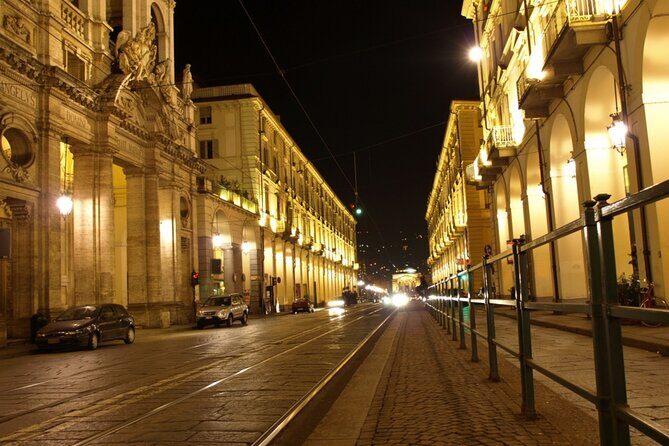
The route then heads toward Rondò della Forca. This name points to a specific point in the confluence area where multiple routes meet. The game notes that this area isn’t far from Piazza dello Statuto, which is described as a hub of esoteric Turin.
That detail changes how you experience this kind of stop. Instead of treating it like just another roundabout area, you’re guided to connect the location to local mystique and stories that sit beneath the everyday street view.
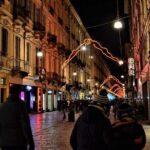
If you’re playing at night, this stop may feel extra atmospheric, but the instructions keep you focused on what to find rather than on wandering.
Stop 4: The Palatine Gate and the Roman layer
Now the game leans hard into the Roman story with the Palatine Gate. It’s described as the main archaeological evidence of Turin’s Roman phase, and one of the best preserved 1st-century BC Roman gateways in the world.
This is the kind of landmark that can feel impressive even if you don’t know much Roman archaeology. The game turns it into an active moment: you look around to find the answer that advances you.
A note on pacing: Roman gateways can reward slow looking, especially when you’re scanning for specific visual cues. Since the whole game is about 90 minutes, don’t rush past the details here—this is where you’ll likely feel the most “aha” moments.
Stop 5: Madama Palace and ducal widows
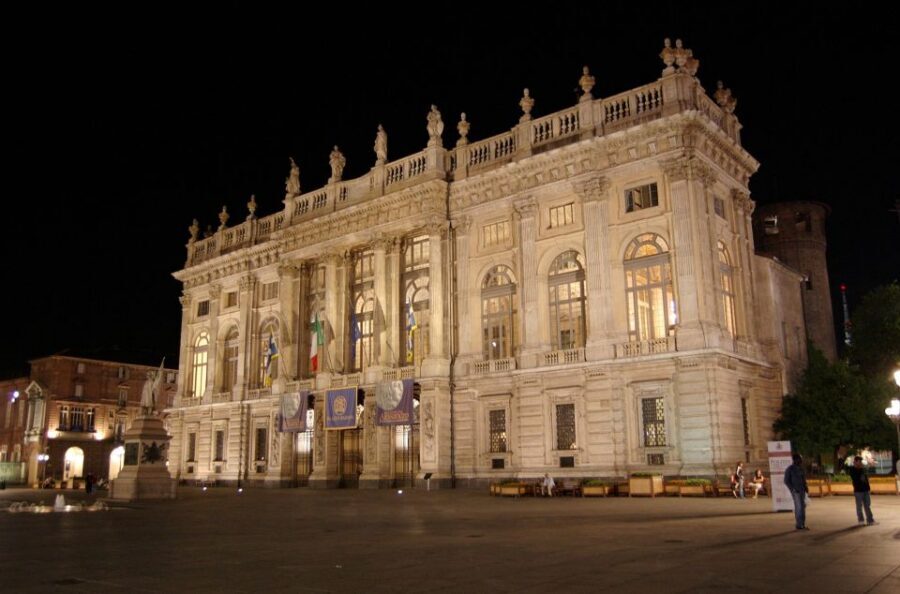
You’ll also reach Madama Palace, started in the 13th century. The palace’s name ties to the resident widows of the 17th-century dukes of Savoy. Later, it served as a seat for political institutions: the Sardinian Senate in 1848–60 and the Italian Senate in 1861–64, and today it houses the Museum of Ancient Arts.
For a game stop, this is a great mix of physical monument and layered timeline. The puzzle approach helps you remember more than you would from a quick glance, because you’re connecting the story to something you see in the environment.
If you like architecture and big civic buildings, this is likely one of your stronger stops. Even without going inside (the game doesn’t promise museum time), the palace grounds the whole route in real Turin power.
Stop 6: Piazza Castello and the city’s museum energy
Next comes Piazza Castello, a major city square lined with museums, theaters, and cafes. In game terms, it functions like a hub stop: you’re moving through a public space where you can pause, recalibrate, and keep your momentum.
Squares work well in this format because the clues can be tied to visible elements around you. Also, if you need a quick break, this is a natural place to do it since you are allowed to take a break and resume later.
Stop 7: Palazzo Trucchi di Levaldigi and the massive door
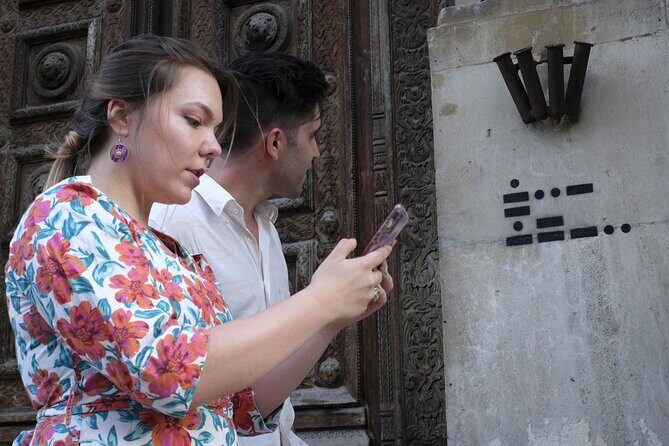
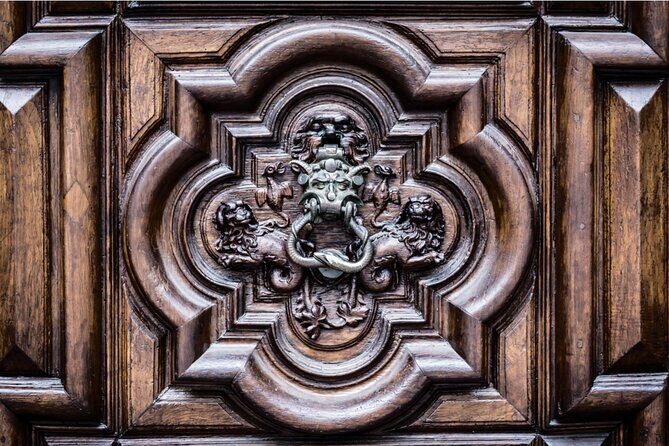
The game then highlights Palazzo Trucchi di Levaldigi, famous for its massive wooden door commissioned in the 17th century by the Earl of Trucchi di Levaldigi.
Doors are perfect for a treasure-hunt style challenge. They are prominent, physical, and hard to miss once you know to look. This is a good stop if you like the game to lead your eyes toward something you wouldn’t automatically notice during normal sightseeing.
If you’re sensitive to details, this one can feel extra satisfying because the story is simple and the feature is very specific.
Stop 8: Piazza San Carlo and the baroque layout
You’ll pass through Piazza San Carlo, one of Turin’s main squares. It was laid out in the 16th and 17th century and is an example of Baroque style. The square’s name honors Charles Borromeo, but it previously went by other names like Piazza Reale, Piazza d’Armi, and even Place Napoleon.
In this section of the route, the game is basically doing city branding. You learn how one square carries multiple eras in its naming and design. Then you translate that into the challenge requirement: look around and find the right answer.
If you’re doing this on a warm day, this is also where you’ll likely notice street life—yet you’ll still be in “find the clue” mode rather than “sit and people-watch.”
Stop 9: Via Po arcades and Caffè Fiorio area
The route then references arcaded Via Po. It says the arcades were built by Amedeo di Castellamonte in 1868, and it points out notable buildings such as the original building of the University of Turin and the historical Caffè Fiorio.
This is one of those parts of Turin that feels made for slow walking. Arcades naturally slow you down, and the game format benefits from that because it gives you time to look for the details needed to answer the prompt.
You’ll also get a nice shift from formal squares to a street corridor feel. If you want a Turin experience that mixes grand buildings with real daily texture, this is where it happens.
Stop 10: The 1648–1656 church details stop
Another stop focuses on a church built between 1648 and 1656, designed on a project of Carlo Morello. The description notes it was a single-nave church without external arcades, then later the choir was enlarged from 1683 and two side chapels were added. In the 18th century, important works of art were added, including a main altar by Bernardo Vittone and other listed interior elements associated with artists like Francesco Martinez, Beaumont da Giuseppe, Stefano Maria Clemente, and others.
This is a detail-heavy stop, and it can be very rewarding if you enjoy architecture trivia. The game’s challenge style helps here because you are not only reading facts; you’re actively searching the environment for the answer connected to those facts.
If you prefer simple stories, this may feel like the most “academic” stop in the route. Still, the payoff is that you’ll walk away knowing names and dates you’d normally miss.
Stop 11: Ponte Vittorio Emanuele I and the finish line
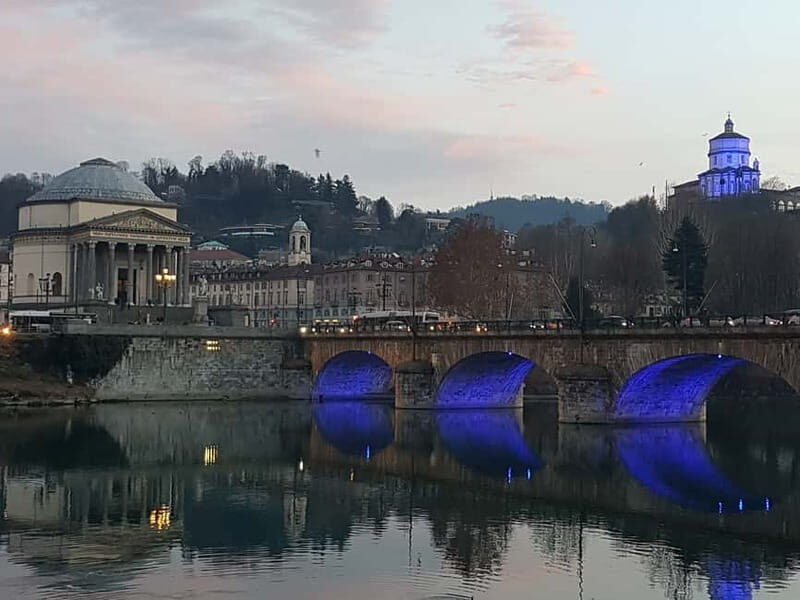
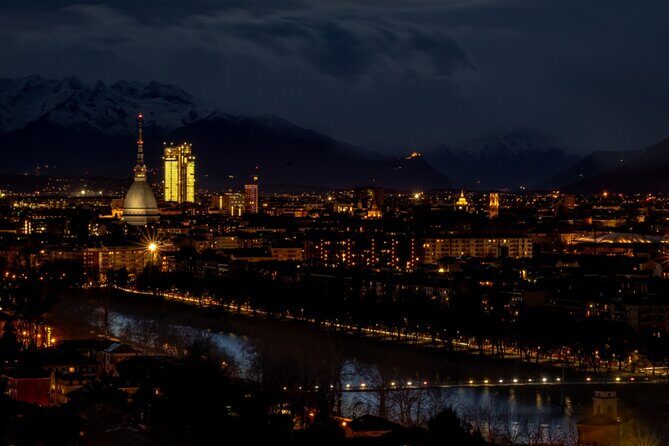
Finally, you end at Ponte Vittorio Emanuele I, described as the oldest existing bridge in Turin. It’s also described as one of the most beautiful ones and an important crossing over the Po river. The game notes that crossing here mattered to the city for centuries and served as a main gateway into Turin from the 15th to 19th centuries.
Finishing on a bridge is a smart design choice. Even if you were focused on clues for most of the route, you get a natural payoff: open views, a sense of arrival, and a clear endpoint you can remember.
This is also a practical endpoint for transport planning. Once you finish, you’re still in a central area rather than out in the quiet outskirts.
The one big risk: phone activation issues
One real-world lesson is worth taking seriously. There has been at least one report of a technical problem when trying to activate the game. In that case, support responded through chat but the problem was not resolved, and an English contact number also did not work.
What this means for you: don’t assume you can wait until the last minute to start the game. Try to activate it early, test audio/brightness if needed, and keep the email support address ready: [email protected].
If the game fails to start, you can lose time in a walk that only lasts about 90 minutes. So build in a small buffer.
Who this is best for (and who should pass)
You’ll likely love this if you want a self-paced way to see the center of Turin, and you like learning through short clues rather than long talks. It is especially good for people who don’t want crowds or don’t want to keep up with a group.
It can also work well for couples, small groups, and solo travelers because it is private and you’re not waiting for anyone else.
You might skip it if you strongly prefer a human guide to explain context, or if you know your phone often struggles with app logins and activation.
Should you book Ghosts of Turin?
I’d book it if you want a low-cost, flexible activity that turns sightseeing into problem-solving. The route hits big Turin names—Roman gateway, major squares, a famous palazzo door, and the Po river bridge—without asking you to follow a guide.
I wouldn’t book it last-minute on a day when you can’t afford tech hassles. With at least one activation problem reported and an overall rating of 3.5, it’s smart to plan for a smooth phone start and keep your expectations realistic: it’s a game, not a guided lecture.
If you show up ready with a charged phone and a bit of curiosity, this is a fun way to see Turin at your own speed, while the spooky stories nudge you to notice details you’d otherwise miss.
FAQ
What is the duration of Ghosts of Turin: Hidden Spell Exploration Game?
The experience is approximately 1 hour 30 minutes.
How much does it cost per person?
The price is listed as $8.11 per person.
Where do I start and end the game?
You start at Piazza Statuto, Torino TO, Italy, and the game ends at Ponte Vittorio Emanuele I, 10124 Torino TO, Italy.
Do I need an internet connection during the walk?
No. The experience supports offline play while you explore, so you do not need internet connection during the activity.
Can I start at any time and pause during the game?
Yes. You have full flexibility to start at any hour, take a break, and resume later.
Is there a physical tour guide with this experience?
No. It is a self-guided activity with no physical tour guide; you use the app instructions on your phone.
Is this experience available every day?
Yes. It is permanently available 24/7 every day of the year.
What if I cancel my booking?
You can cancel up to 24 hours in advance for a full refund. If you cancel less than 24 hours before the start time, the amount paid is not refunded.
Is this tour private and accessible for different travelers?
It is private (only your group participates). Service animals are allowed, it is near public transportation, and most travelers can participate.