REVIEW · TURIN
Torino Walking Tour with Audio and Written Guide by a Local
Book on Viator →Operated by Walking Cap · Bookable on Viator
Turin finally makes sense, on foot. This local audio-and-text walk threads through the city’s big squares, royal settings, and church landmarks, so you’re not wandering with a blank map. Expect multi-language guidance and local context built for an easy 3 to 4 hour loop.
I really like how this tour gives clear guidance turn by turn, then adds useful stories so the sights connect. I also appreciate the practical side: you get monument tips plus restaurant recommendations for authentic food, which helps after the walking part ends.
One consideration: it’s designed to be an accessible overview. If you want deep museum-level detail at every stop, you might find some sections feel a bit basic unless you choose the optional tickets.
Why this Torino tour is worth your attention
- Audio + written guide on your phone, in multiple languages (English offered, plus more)
- A structured loop through the key squares and skyline churches, back to the same starting spot
- Optional tickets for the big interior sites, so you control the time and cost
- Local restaurant advice baked into the digital guide
- Small-group feel with a maximum of 99 travelers and a mobile ticket
In This Review
- Why this Torino audio walking tour works (and what you’ll need)
- Starting at Chiesa della Gran Madre di Dio: warm-up with a viewpoint church
- Piazza San Carlo and the Twin Churches: Turin’s “stage set” center
- Piazza Carignano and Palazzo Carignano: where the Risorgimento story lives
- Piazza Castello: porticoes, power, and the roads that matter
- UNESCO palaces with optional tickets: what to pay for (and when not to)
- Palazzo Reale di Torino (ticket not included)
- Palazzo Madama Torino (ticket not included)
- Real Chiesa di San Lorenzo and Cattedrale di San Giovanni Battista: Turin’s church skyline logic
- Real Chiesa di San Lorenzo (free)
- Cattedrale di San Giovanni Battista (free)
- Mole Antonelliana: the icon moment, with optional ticket time
- Piazza Vittorio Veneto and the return loop: big space for a slower pace
- Price and value: what $7.81 really buys you
- Pace and depth: who this audio walk suits best (and who should think twice)
- Should you book this Torino walking tour with audio and written guide?
- FAQ
- Is the tour offered in English?
- How long is the Torino walking tour?
- Do I need tickets for the main sights on the route?
- What’s included in the digital guide?
- Do I need internet on my phone during the tour?
- How do I listen to the audio?
- Where does the tour start and end?
- Is there a limit on group size?
- Are service animals allowed?
- What if I need to cancel?
Why this Torino audio walking tour works (and what you’ll need)
This experience is built around a simple idea: let your phone do the “guide work,” while you focus on what you’re seeing. You’ll get a digital written guide for independent follow-up, plus an audio-guide with text in multiple languages (Eng, Esp, Ita, De, Fr). You’re also told how to use your speakers or headphones, which matters when you’re trying to hear over street noise.
The one tech requirement is important: you need a smartphone with internet connection to use the digital guide. The activation steps are in your voucher, so don’t wing it—read the instructions before you start walking.
The overall structure is calm and manageable. The tour covers about 3 to 4 hours and stays centered on classic Turin scenes: grand squares, portico-lined streets, UNESCO-listed palaces, and church architecture that shapes the city skyline. And because it’s offered in English (with other languages available through the guide), it’s a good fit if you want a language bridge without slowing everyone down.
Starting at Chiesa della Gran Madre di Dio: warm-up with a viewpoint church
Your loop begins at Chiesa della Gran Madre di Dio, in Piazza Gran Madre di Dio. Starting here sets a nice tone because you’re not immediately thrown into the busiest center. This church is described as imposing and beautiful, and the guide focuses on the story behind it—commemorating the return of Victor Emmanuel I of Savoia after Napoleon’s defeat.
Even if you don’t go inside, you’ll usually find a quick payoff at this kind of starting point: a landmark you can orient yourself with, plus enough context to understand why Turin leans so hard into royal symbolism. It also helps that the tour ends back at the same place. That means you finish where you started, without the stress of navigating to a new drop-off.
Other walking tours we've reviewed in Turin & Piedmont
Piazza San Carlo and the Twin Churches: Turin’s “stage set” center
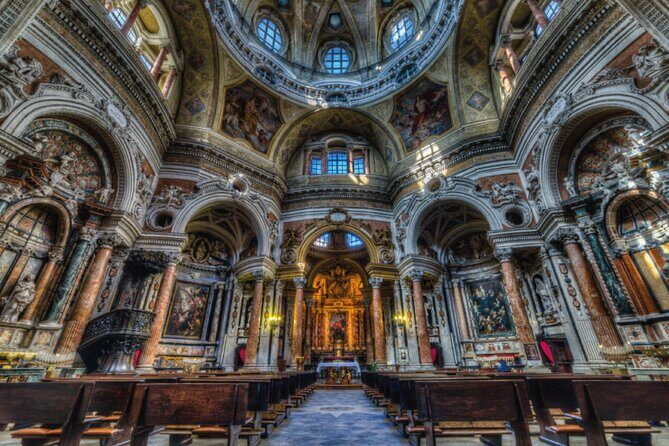
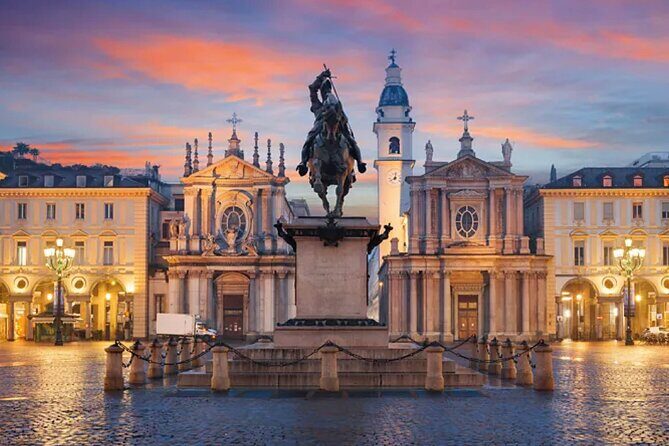
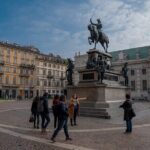
Next you head to Piazza San Carlo, one of Turin’s most precious gems. This is the kind of square that makes you immediately understand what “Turin style” means—elegant urban space, built for strolling and watching others stroll.
The big draw here is the Twin Churches. The guide flags what to look for and gives you the historical charm that makes the view feel more meaningful than just pretty façades. If you’re the type who likes to know what you’re staring at (and not just take photos), this is a great first “story stop.”
Time on your feet is short—about 10 minutes—so you’re not trapped in a long pause. It works like a warm handshake from the city.
Piazza Carignano and Palazzo Carignano: where the Risorgimento story lives
From San Carlo, you stroll to Piazza Carignano and then toward Palazzo Carignano, a major 17th-century palace. The tour points you toward the Palazzo of the same name and connects it to the National Museum of the Italian Risorgimento.
This is one of those stops that can feel instantly smarter because Turin’s political and national story is written in its buildings. Even if you don’t pay for a ticket here, the guide gives enough background that the “why this matters” lands quickly. And since this stop stays free (no monument ticket required for the tour segment), you can keep your spend under control if you’re traveling on a budget.
Piazza Castello: porticoes, power, and the roads that matter
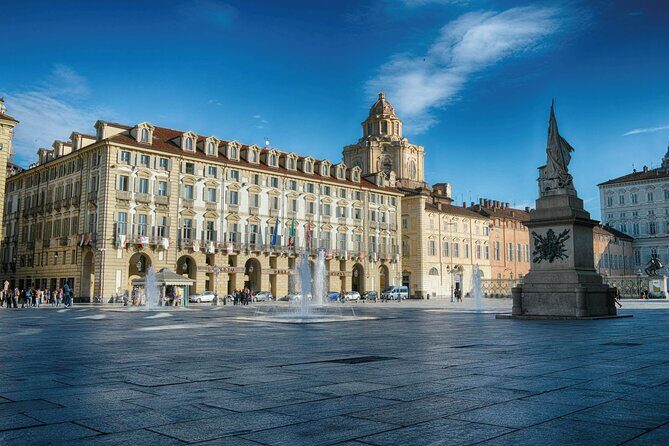
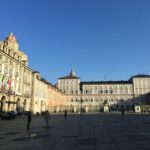
Then comes Piazza Castello, described as the vital center of aristocratic life during the Savoia kingdom. You’ll also get a practical orientation: Turin’s main streets run outward from here, including via Roma, via Garibaldi, and via Po.
This is where the tour does something genuinely useful. It turns a place you might otherwise treat like a photo stop into a map in your head:
- via Garibaldi is highlighted for affordable shopping
- via Po is pointed out as a route that leads toward the river
The porticoes framing the square give you a feel for how Turin protects pedestrians and shapes street life. The tour sets aside about 20 minutes here, enough time to register the layout and not just snap-and-go.
UNESCO palaces with optional tickets: what to pay for (and when not to)
Turin’s center has a habit of making you want to open your wallet. This tour gives you a smart option: keep the route moving for free, then add interiors if you care.
Other walking tours we've reviewed in Turin & Piedmont

Palazzo Reale di Torino (ticket not included)
Palazzo Reale di Torino is UNESCO-listed, and the guide explains its origin as a bishop’s palace. It was redesigned in the late 16th century at the request of Duke Emanuele Filiberto, when Turin became capital of the Savoia dukedom. The tour gives you about 20 minutes of exterior-time and context, but the ticket is not included (listed at 15€).
If you love palaces, dynastic art, and the “inside details” you can’t see from the street, this is a likely yes. If you’d rather save your time for churches and viewpoints, you can skip the interior and still leave understanding why the building matters.
Palazzo Madama Torino (ticket not included)
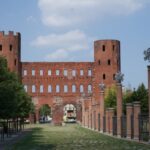
Next is Palazzo Madama Torino, also UNESCO-recognized. The key thing here is what it houses: the Civic Museum of Ancient Art. The guide also connects the site to older layers of Turin, including that the Roman Porta Decumana once stood there as an access point from the Po side. After the fall of the Western Roman Empire, that gate became a fortress for defense.
The segment is roughly 20 minutes, but again, ticket not included (listed at 10€).
For me, the value question is simple: if ancient art and archaeological layers are your thing, pay. If you’re mostly after city orientation and the feel of Turin’s architecture, the exterior + story may be enough.
Real Chiesa di San Lorenzo and Cattedrale di San Giovanni Battista: Turin’s church skyline logic
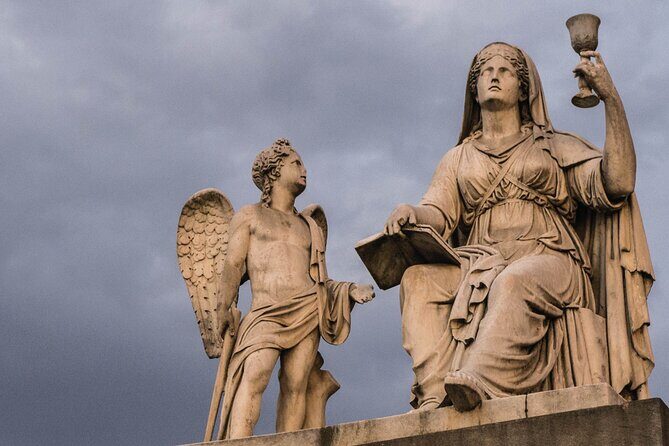
After the palaces, the tour shifts gears to churches—specifically, the ones that shape the city’s silhouette.
Real Chiesa di San Lorenzo (free)
At Real Chiesa di San Lorenzo, you get a description of the church as lovely, with an important story and some curious details. A standout feature is that the dome is part of the Turin skyline. The tour gives about 20 minutes here, which is perfect for exterior observation paired with a guided explanation.
Cattedrale di San Giovanni Battista (free)
Then you arrive at Cattedrale di San Giovanni Battista, framed as the only Renaissance-style church in Turin. The guide gives dates: the complex built between 1491 and 1498, while the bell tower is slightly older (1468). You also learn about expansion in the 17th century, when an additional chapel was built for preserving the Holy Shroud.
This stop is about 25 minutes, and it’s one of the more informative segments because Renaissance identity and the Holy Shroud connection both change how you interpret what you see.
If you’ve ever walked past a church thinking, “I wonder what I’m looking at,” this is the style of stop that helps: it connects form to story, not just style to style.
Mole Antonelliana: the icon moment, with optional ticket time
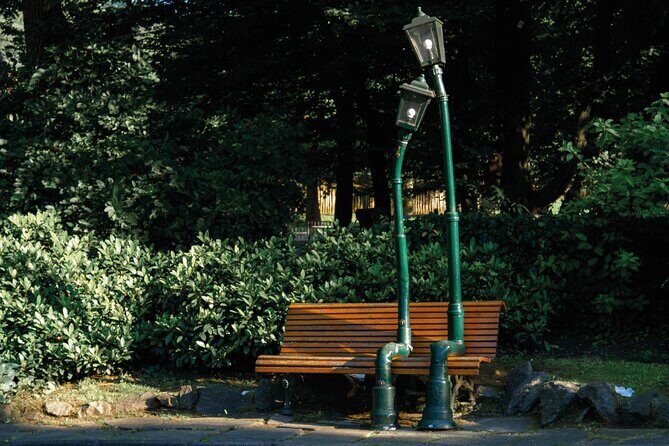
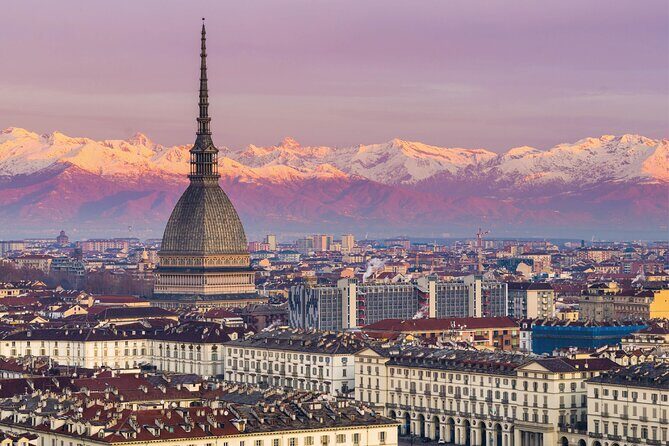
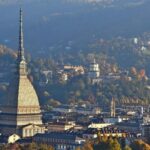
Next you reach Mole Antonelliana, called beautiful, imposing, and unmissable. This is the city’s symbol, and the tour focuses on the building’s story. The ticket for entry is not included and is listed as from 10€ (the exact price isn’t pinned down in your info).
Even if you don’t go inside, this is still one of the stops that makes the whole walk feel “Turin.” The tour allocates about 30 minutes here, which suggests it’s not treated like a quick photo pit stop—it’s a real landmark moment.
If you like icons and want a break from walking-heavy days, this is also a good place to decide on the spot whether you want to spend money on the interior.
Piazza Vittorio Veneto and the return loop: big space for a slower pace
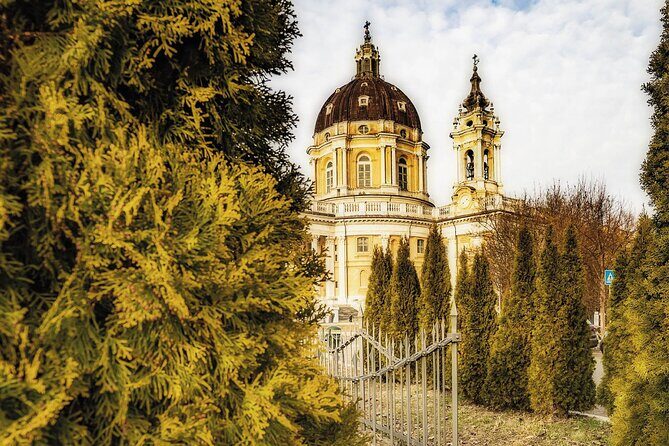
Finally, you hit Piazza Vittorio Veneto, one of Europe’s largest squares by area, listed at 38,000 square meters. It was created in the early 1800s with an idea to expand the city toward the Po River. Naming history matters here too: it was named after Vittorio Emanuele I until the end of World War I, when it was renamed.
This stop gives about 20 minutes. That’s enough time to take in the scale and notice how a city uses open space to change the mood—especially after a sequence of palace façades and church architecture.
From there, you wrap back toward Chiesa della Gran Madre di Dio, where the tour ends. Since you began there, you don’t have to solve the “how do I get back?” problem while your feet are tired.
Price and value: what $7.81 really buys you
At $7.81 per person, this tour is positioned as a budget-friendly way to get a guided framework without committing to expensive museum entry fees. What you’re paying for isn’t just audio. You’re paying for a pre-planned route, structured stops, and a digital guide that includes:
- Tips for monuments, history, curiosities, and personal anecdotes
- Best advice for local restaurant with authentic food
- Text plus audio across several languages
Then there’s the cost-control piece. Some of the city’s major interiors are optional with known ticket prices:
- Palazzo Reale: 15€
- Palazzo Madama: 10€
- Mole Antonelliana: from 10€
So the real value calculation depends on your interest level. If you’re fine with outdoor context and a strong orientation walk, you can stay close to the base price. If you want to go inside everything highlighted as UNESCO-worthy, your total spend will jump—but you’ll choose on your terms, rather than being forced into a fixed bundle.
Also note the group size limit: maximum 99 travelers. That matters with walking tours because smaller crowds usually feel calmer, especially when you’re relying on a phone guide and not waiting for a live group lecture.
Pace and depth: who this audio walk suits best (and who should think twice)
This experience is built for people who want Turin explained in a way that fits on a stroll. It works best if you fall into one of these categories:
- First-time visitors who want to get their bearings fast
- People who like architecture + story, but not necessarily a full guided museum session
- Travelers who prefer to move at their own speed and only stop when the guide makes it worthwhile
The main risk is depth. The experience is not a substitute for a specialist guide in a museum setting. One of the lower-score comments you’ll want to keep in mind is that the tour can feel simple at times, with guidance that may not fully satisfy if you crave lots of detail at every step. Another note suggests a quick or slightly superficial feeling in some stops, even if the overall structure is useful.
So here’s how I’d match it to your style:
- If you want a well-organized orientation walk with clear explanations and optional “pay to go in,” book it.
- If you want heavy interpretation, long time inside major interiors, or a deep lecture at each monument, consider pairing this with a more focused tour—or choose a different format entirely.
Should you book this Torino walking tour with audio and written guide?
Book it if you want a practical, low-cost way to connect Turin’s squares, palaces, and church skyline into one coherent walking route. The included mix of monument tips and restaurant guidance is especially valuable because it helps after the walking ends. The fact that the audio also comes with written text in several languages makes it easier to follow even if your listening gets interrupted by street life.
Skip or rethink it if you’re expecting a museum-grade guided experience for every stop. The optional ticket structure is great, but you’ll need to be willing to pay extra if you want interiors.
If you’re deciding, my advice is simple: treat this as your Turin orientation. Use the optional tickets selectively. Then spend your remaining time exploring at the pace you actually want.
FAQ
Is the tour offered in English?
Yes. The experience is offered in English, and the audio/text guidance is also available in multiple languages.
How long is the Torino walking tour?
It runs for about 3 to 4 hours.
Do I need tickets for the main sights on the route?
Some monument tickets are not included. Palazzo Reale (15€), Palazzo Madama (10€), and Mole Antonelliana (from 10€) are optional.
What’s included in the digital guide?
You get a digital written guide plus an audio-guide and text in multiple languages, with tips for monuments and local restaurant recommendations.
Do I need internet on my phone during the tour?
Yes. You’ll need a smartphone with an internet connection to use the digital guide.
How do I listen to the audio?
You can hear it through your phone speakers or through headphones if you have them.
Where does the tour start and end?
It starts and ends at Chiesa della Gran Madre di Dio, Piazza Gran Madre di Dio, 1, 10131 Torino.
Is there a limit on group size?
Yes. The tour has a maximum of 99 travelers.
Are service animals allowed?
Yes, service animals are allowed.
What if I need to cancel?
You can cancel for a full refund up to 24 hours before the experience start time.