REVIEW · TURIN
Turin: Guided Sightseeing Walking Tour
Book on GetYourGuide →Operated by Keys of Italy/Piemonte · Bookable on GetYourGuide
Turin is a city that rewards a good guide. This 2-hour walking tour strings together the places that explain how Turin went from Roman outpost to Savoy power center to modern film culture. I especially like the way it mixes big-name sights with just enough “why it matters” context to make the streets feel intelligible fast.
Two things I really like: you start at Piazza San Carlo, the city’s social heart, and then you move in a logical line through Roman, Renaissance, Savoy, and Jewish-history landmarks. The tour also earns trust with a small group size (up to 9) and guides who are described as professional and responsive to questions, including names like Nadia and Ileana.
One thing to consider: entry tickets are not included, so you’ll mainly get the exterior and the story for places like the Mole Antonelliana rather than guaranteed time inside.
In This Review
- Key highlights you’ll feel right away
- Piazza San Carlo: the elegant starting point that sets the tone
- Port Palazzo Market to Porta Palatina: Roman Turin in one stop
- San Giovanni Battista Cathedral: Renaissance style in a specific Turin setting
- Piazza Castello: where Turin’s power centers make sense
- Piazza Carignano and Vincenzo Gioberti: Savoy-era meaning you can carry home
- Mole Antonelliana: the film museum landmark with a surprising backstory
- Price and value: is $85 worth two hours in Turin?
- Best for: history-minded walkers, first-timers, and anyone who hates random sightseeing
- What to bring and how to plan your day
- Should you book this Turin guided walk?
- FAQ
- Where is the meeting point?
- How long is the tour?
- How much does it cost?
- What’s included in the price?
- Are entry tickets included for landmarks and museums?
- How large is the group?
- What languages are available for the live guide?
- Is the tour wheelchair accessible?
- What should I bring?
- Is free cancellation available?
Key highlights you’ll feel right away
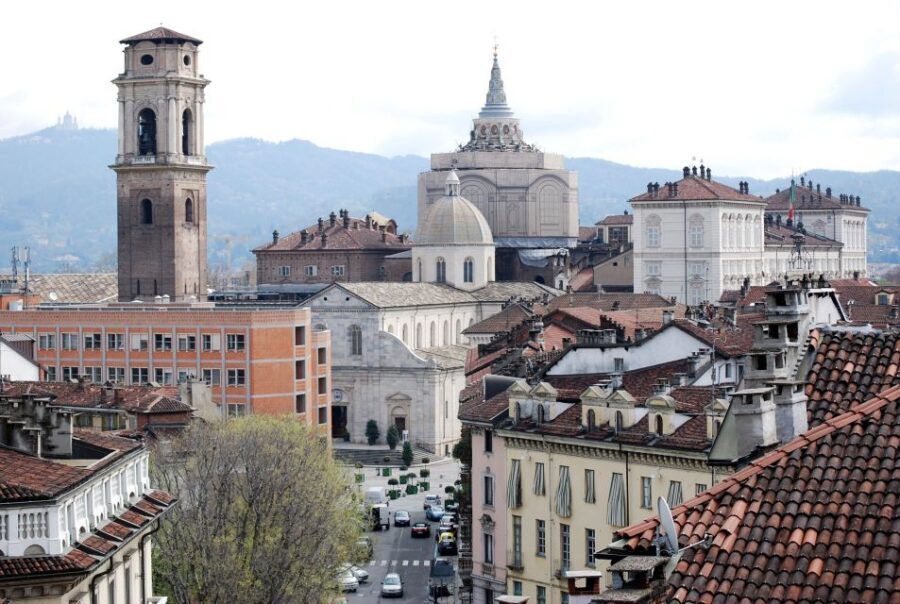
- Small group, up to 9 people, which keeps questions from getting stuck in the back row
- Start at Piazza San Carlo, with a history lesson tied to the buildings around you
- Porta Palatina in full context, one of the best-preserved Roman gateways you’ll see in Europe
- San Giovanni Battista Cathedral explained simply, including why its style is unusual for Turin
- Piazza Castello and its palaces, the clearest snapshot of Turin’s civic center
- Mole Antonelliana from the outside, plus the story behind how it started and what it holds today
Piazza San Carlo: the elegant starting point that sets the tone
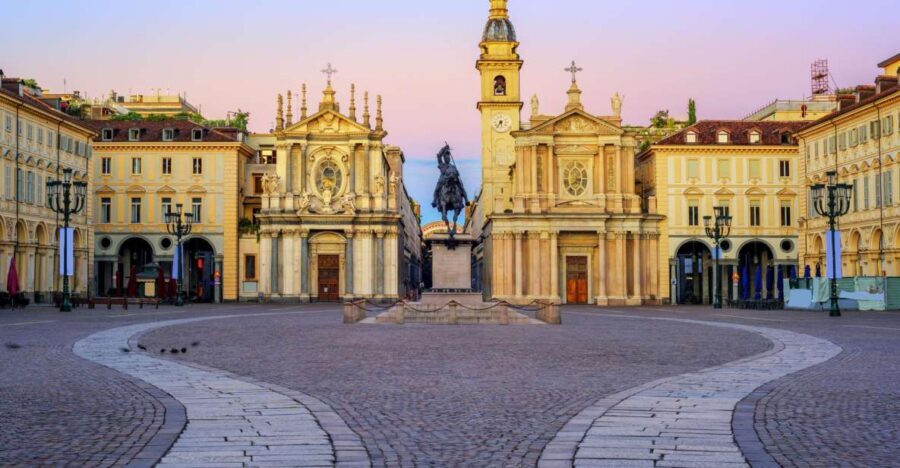
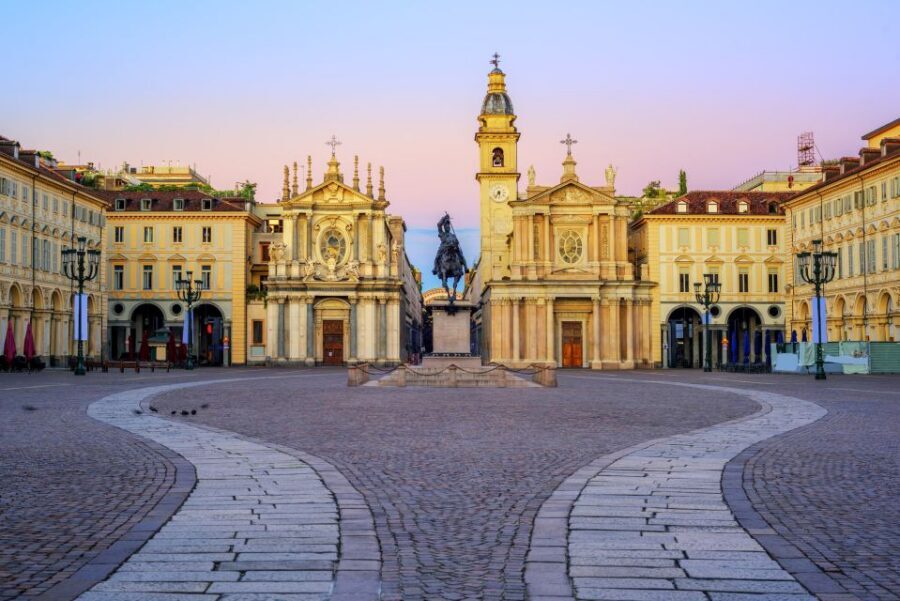
You meet your guide next to the bronze horse statue, and right away you’re in the right mindset. Piazza San Carlo is often called the lounge of Turin, and it fits. It’s a place where the city feels designed for lingering, not rushing.
What makes this start work is the framing. You don’t just stand in the middle and point. Your guide shares what the square was like when it took shape back in 1619, and you look at the architecture as you walk the perimeter. That turns the space from scenery into a story you can remember.
A practical bonus: since this is the first stop, you can get your bearings quickly. The guide’s pacing is the pace you’ll keep for the full walk. Bring comfortable clothes and shoes because the time adds up over two hours, even if the group stays tight.
Other walking tours we've reviewed in Turin & Piedmont
Port Palazzo Market to Porta Palatina: Roman Turin in one stop
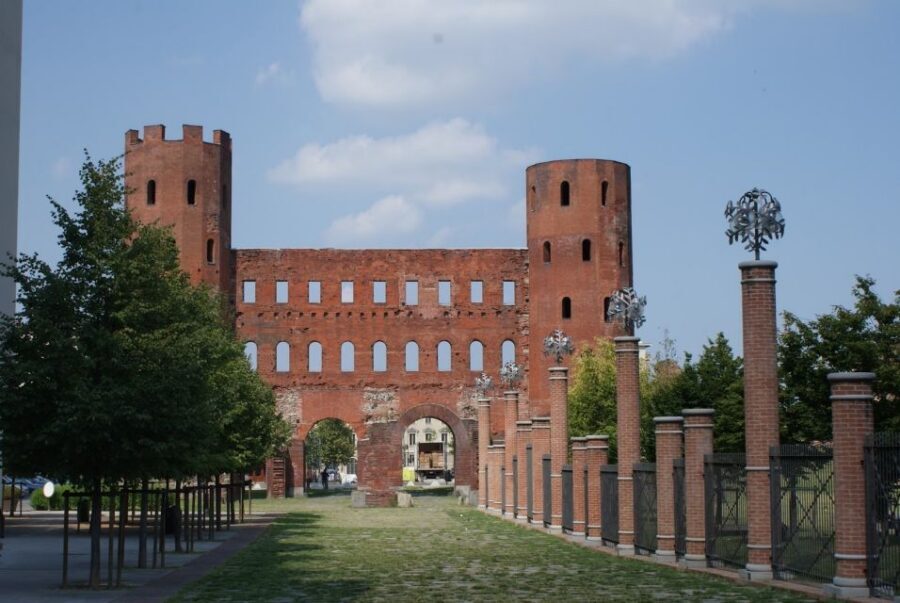
After Piazza San Carlo, the walk goes past the Port Palazzo Market area. Even if you’re not planning to stop and shop, it helps you understand that Turin doesn’t separate “history” from everyday life. The market district is part of the city’s pulse, so the Roman moment that follows feels earned.
Then you reach Porta Palatina. This is one of the best-preserved Roman gateways from the 1st century BC in the world, and your guide explains it in a way that’s easy to visualize. You’re not studying stone trivia—you’re seeing a boundary structure that still shapes how people move through the city.
Here’s the value of pairing the market area with the gateway: you see continuity. Turin keeps reusing the logic of its older layout. That’s one of the big reasons guided walking tours work so well here. You come away with a map in your head, not just a list of monuments.
San Giovanni Battista Cathedral: Renaissance style in a specific Turin setting
Next up is San Giovanni Battista Cathedral, the main Catholic church in Turin. You’ll hear where it sits and how it fits into city life, because the square of the same name isn’t just a background—it’s part of why the church feels like a centerpiece.
Your guide focuses on the building’s timing and style. The cathedral was built at the end of the 15th century, and it’s Turin’s only religious building in the Renaissance style. That detail matters, because it prevents the common mistake of treating Turin’s church architecture as all one thing. Here, the guide makes the contrast clear.
If you like architecture notes that don’t require a degree, this stop is for you. You learn what you’re looking at and why it’s distinctive, without drowning in terms. And because it’s a guided stop, you’ll likely get a few “I didn’t know that” moments from the places you’d otherwise pass by.
Piazza Castello: where Turin’s power centers make sense
From the cathedral area, you arrive at Piazza Castello, described as the true center of Turin. It’s a big esplanade, and your guide shows you why that openness is part of the story. This is where civic life and authority meet, and the space is built to handle both.
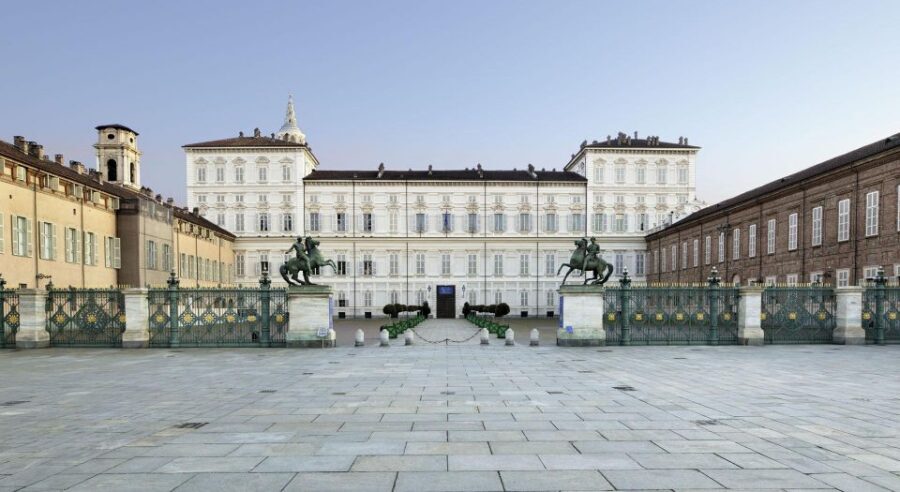
You’ll admire Palazzo Madama and Palazzo Reale. Even from outside, these buildings communicate status. Your guide ties them to the role the area played as Turin developed and consolidated its identity.
What I like about this section is how it moves from “spot the landmark” to “understand the city.” After Porta Palatina and the cathedral, Piazza Castello feels like a new chapter. The Roman gateway and Renaissance church tell you about earlier Turin. The palaces tell you about the city’s political confidence—why it built monumental spaces and kept using them.
Piazza Carignano and Vincenzo Gioberti: Savoy-era meaning you can carry home
Then comes Piazza Carignano, one of Turin’s most important historic squares. It’s tied to the Savoy era, and your guide helps you see why that connection matters. This is where Turin starts to feel more like a capital with official personality, not just a collection of old buildings.
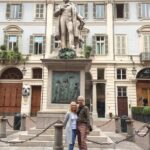
There’s also a monument in the square honoring Vincenzo Gioberti, and you’ll learn about him while you’re standing there. That’s a smart move because a square without names can blur together. With Gioberti added to the picture, you’ll remember the stop for a reason instead of just for its architecture.
If you like learning that lands as personal memory—one figure, one square, one takeaway—this is one of the strongest parts of the walk. It also gives you a break from looking upward all the time. Monuments at human scale let you absorb the story with your whole body relaxed.
Other walking tours we've reviewed in Turin & Piedmont
Mole Antonelliana: the film museum landmark with a surprising backstory
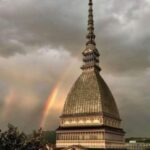
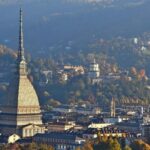
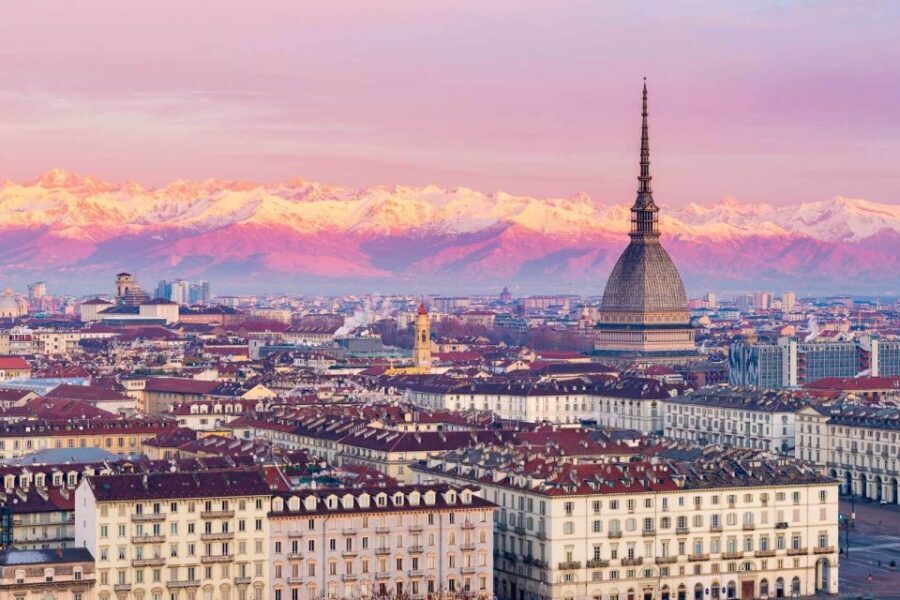
Your tour ends at the Mole Antonelliana, one of Turin’s most iconic landmarks. From the outside, it’s unforgettable, and your guide gives you the context that makes it click.
You’ll hear that it was built in 1863 and rises to 167 meters. You’ll also learn the timeline of how the building changed hands: it was initially a place of worship for Turin’s Jewish community, then sold to the municipality in 1877. Today, the tower houses the National Cinema Museum.
Even though entry tickets are not included, the outdoor viewing still feels worthwhile because of that history. The Mole isn’t just a tall silhouette—it’s a physical record of how Turin reorganized its identity over time. After the walk through Roman, Renaissance, and Savoy-era reference points, the Mole becomes the bridge to modern culture.
If you’re the type who enjoys museums but hates wasting time guessing what you’re looking at, this end stop is a nice “set your expectations” moment. The building’s story prepares you for what you’d see if you decide to visit the museum later.
Price and value: is $85 worth two hours in Turin?
At $85 per person for a 2-hour guided walk, you’re paying for more than movement through the city. You’re paying for interpretation: the guide connects each stop to a reason, and you get that for the whole route, not just for one highlight.
The value improves because the group is intentionally small—limited to 9 participants. With that size, it’s easier for the guide to keep your questions answered and for everyone to hear the important points. That kind of attention is exactly what people seem to appreciate, including compliments for guides being professional and able to respond to expectations.
Keep one cost detail in mind: entry tickets are not included. So you’re not buying admission; you’re buying the story and the sights outside. If you want inside time at multiple museums, you’ll likely need a separate plan after the walk. But if your goal is to understand Turin’s layout and main historical themes, this price-to-time ratio can be a good deal.
Best for: history-minded walkers, first-timers, and anyone who hates random sightseeing
This tour fits best if you want a clean introduction to Turin’s key eras without spending your whole day reading plaques. You’ll move from Roman structures to a Renaissance-style religious building, then to Savoy-era squares, and finish with the Mole tied to Jewish worship and later film culture.
It’s also a solid choice for first-time visitors. The route gives you a mental map: where the social center is, where the civic center sits, and where one of the city’s most famous towers anchors modern identity. When you understand that spine, self-guided exploring afterward gets easier.
If you’re traveling with mobility considerations, the tour is wheelchair accessible, which is a meaningful practical detail for a walking route. And because it’s a live guide in English, Spanish, French, and Italian, you should have no trouble following the narrative.
What to bring and how to plan your day
This walk is short, but it’s not a sit-down lecture. Wear comfortable shoes and comfortable clothes, and you’ll be glad you did. Two hours can feel like more when you’re stopping often for explanation and photos.
For planning: leave space after the tour if you want to keep exploring the areas you just learned about. The route touches multiple central squares—Piazza San Carlo, Piazza Castello, Piazza Carignano—so you can naturally branch out into cafés, markets, or quiet side streets afterward.
If you’re hoping to visit the National Cinema Museum inside the Mole, remember that entry tickets are not included, so you’ll need to add that later.
Should you book this Turin guided walk?
Yes—if you want the quickest way to understand why Turin looks the way it does, this tour is a strong pick. The route connects a Roman gateway, a standout Renaissance-style cathedral, Savoy-era squares tied to named figures, and the Mole Antonelliana with a backstory that goes beyond its height.
It’s also a good choice if you care about guide quality and group size. A small group keeps the experience personal, and guides named like Nadia and Ileana have been praised for professionalism and for answering questions well.
Book it if your goal is clarity, context, and a memorable overview in 2 hours. Just don’t expect guaranteed museum entry—think of it as your history and architecture starter course, not the whole meal.
FAQ
Where is the meeting point?
You meet your guide next to the bronze horse statue.
How long is the tour?
The tour lasts 2 hours.
How much does it cost?
It costs $85 per person.
What’s included in the price?
The price includes a professional guide.
Are entry tickets included for landmarks and museums?
No. Entry tickets are not included.
How large is the group?
The group is small, limited to 9 participants.
What languages are available for the live guide?
The tour is offered in English, Spanish, French, and Italian.
Is the tour wheelchair accessible?
Yes, the tour is wheelchair accessible.
What should I bring?
Bring comfortable shoes and comfortable clothes.
Is free cancellation available?
Yes. You can cancel up to 24 hours in advance for a full refund.