REVIEW · TURIN
MAUTO Automobile Museum
Book on Viator →Operated by GIUSEPPE ANGILERI · Bookable on Viator
Cars. Turin. A perfect combo. This MAUTO Automobile Museum tour is a smart way to see 1756-to-today auto history and a dedicated Ayrton Senna racing display without worrying about getting there. I like that the museum lays everything out chronologically so you can actually follow how engineering and style changed over time, and I love that it connects the cars to Turin’s industrial identity. One consideration: the museum ticket is not included (listed as €15 per person), and if you’re a hardcore Ferrari/Lamborghini collector type you may find some modern sections less satisfying than the legends you expect.
You’ll meet at Piazza Castello at 2:30 pm and then head out by private transport for about 3 hours inside MAUTO. There are snacks included, but no meal plan, so I suggest you plan food either before you go or after—easy options are nearby at Lingotto.
In This Review
- Key Highlights at MAUTO (What Matters Most)
- MAUTO in Turin: Why This Car Museum Feels Like the City
- What You’re Really Buying: Price, Time, and What’s Included
- The 2:30 pm Plan: Meeting Point and How the Timing Works
- Inside the Museum: How the Layout Helps You Follow the Story
- Stop 1: The Car Collection—Bugatti, Ferrari, Isotta Fraschini, and More
- Ayrton Senna at MAUTO: Motorsport Storytelling You Can’t Ignore
- Turin’s Auto Economy Thread: Why FIAT Matters Here
- Comfort and Food: Snacks Included, Meals Not
- Getting There (and Parking Reality Check)
- Who This Tour Fits Best (And Who Might Want Alternatives)
- Value for Money: Is $180.24 Worth It?
- Quick FAQ Before You Book
- FAQ
- How long does the MAUTO Automobile Museum visit take?
- Is the museum entrance ticket included?
- What’s included in the tour price?
- Where is the meeting point and what time does it start?
- Is the tour offered in English?
- Does the tour run in any weather?
- What’s the cancellation policy?
- Should You Book This MAUTO Tour?
Key Highlights at MAUTO (What Matters Most)
- Chronological car evolution: more than 170 original vehicles across multiple eras.
- Big-brand headliners: you’ll see a preserved Bugatti, Ferrari, and Isotta Fraschini.
- Ayrton Senna exhibit space: dedicated storytelling about his life and motorsport legacy.
- Designed for non-gearheads too: the layout avoids that trapped-in-a-hall feeling, with breaks and family-friendly areas.
- No ticket included in the tour price: you’ll still need to pay the museum admission on top.
MAUTO in Turin: Why This Car Museum Feels Like the City
Turin is Italy’s automotive brain trust, and MAUTO is built to show you that link. I like how the museum doesn’t treat cars as isolated antiques—it frames them as a driver of jobs, design, and identity, including the impact of FIAT (FCA) in Turin’s economy.
Even if you don’t know a carburetor from a crankshaft, the museum helps you read the changes. The exhibits move through time, so you’re not just staring at shiny machines—you’re seeing how people solved new problems with power, safety, materials, and aerodynamics.
If you’re expecting a simple parade of cars behind ropes, this is different. The setting and presentation are part of the experience, and that matters because it keeps the visit flowing instead of turning into museum “watching paint dry,” which is always a risk with long indoor exhibits.
Other Cinema and Automobile Museum experiences in Turin


What You’re Really Buying: Price, Time, and What’s Included
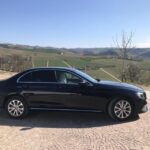
The tour price is listed at $180.24 per person, and it covers private transportation plus snacks. It does not include the museum entrance fee (listed as €15 per person), so you should budget for that add-on before you go.
Is it good value? It can be, especially if you want door-to-door convenience rather than relying on trains, buses, and walking. Private transport is often what makes the price jump on these museum days, but you get back time and less hassle in the middle of a city where parking and cross-town travel can be annoying.
Duration is about 3 to 4 hours total, with roughly 3 hours spent at the museum. That’s a workable window: long enough to see the main exhibits and the Senna area, not so long that you feel defeated by museum fatigue.
The 2:30 pm Plan: Meeting Point and How the Timing Works
This is scheduled to start at 2:30 pm from Piazza Castello. The activity ends back at the meeting point, which is helpful because it removes the need to figure out your return while you’re tired and museum-brained.
Why does start time matter? Late afternoon tends to be ideal for museum visits because you avoid the worst midday travel stress, and you can still grab food afterward without rushing. With no meals included, that flexibility is a real advantage.
Also note: the experience requires good weather. Even though the museum is indoors, you’re still moving through Turin to reach it, so plan for the possibility of rescheduling if conditions are poor.
Inside the Museum: How the Layout Helps You Follow the Story
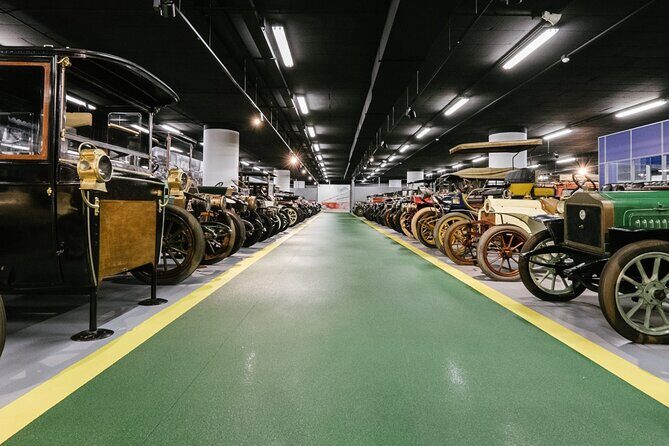
MAUTO’s visit is structured around the evolution of the automobile, and you’ll see exhibits that span from early models through the present. The museum highlights more than 170 original cars, with displays arranged so you can track the big shifts across decades.
What I like about this setup is the clarity. Chronology gives your brain an easy job: when you see how things change, you naturally connect engineering choices to what drivers and industry needed at the time.
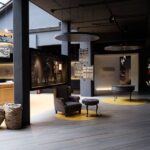
You’ll also find spaces that make a long visit easier, including rest areas and areas designed for younger visitors. That matters if your group includes a mix of ages, because it reduces the chance that one person’s energy collapses halfway through.
Stop 1: The Car Collection—Bugatti, Ferrari, Isotta Fraschini, and More
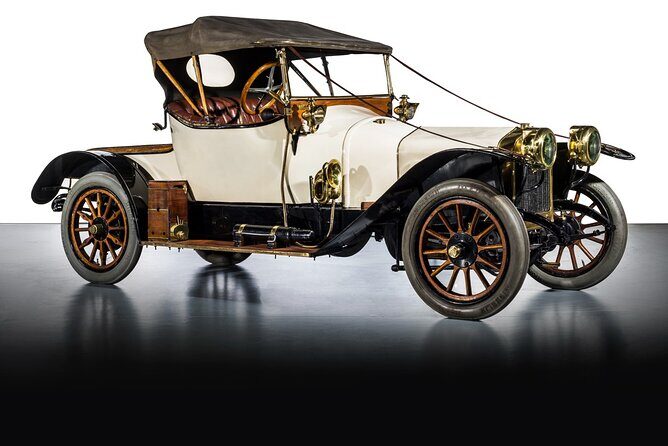
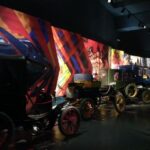
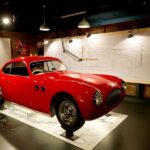
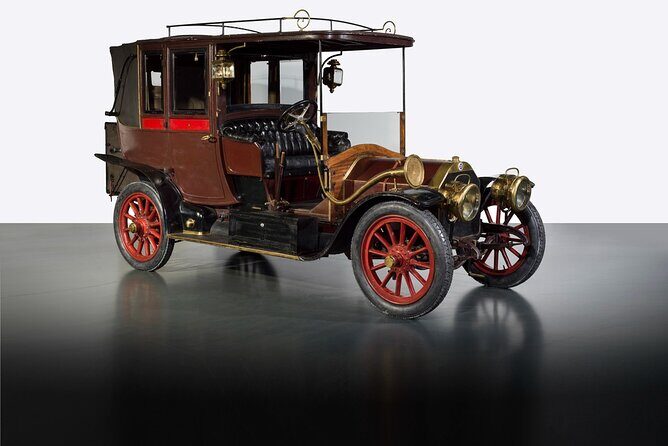
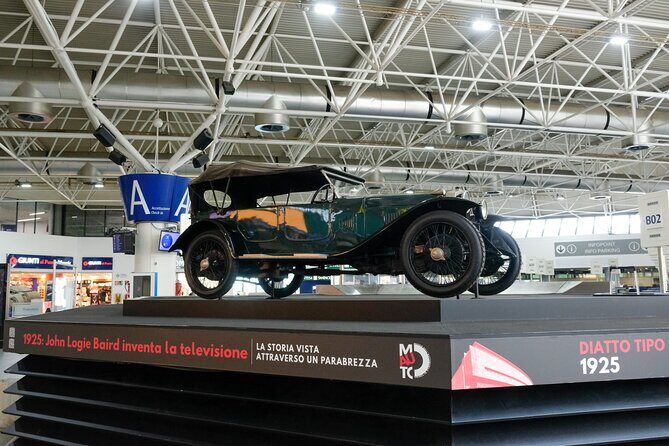
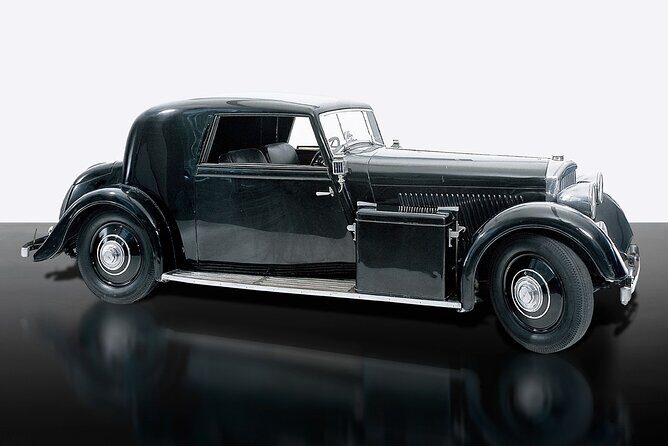
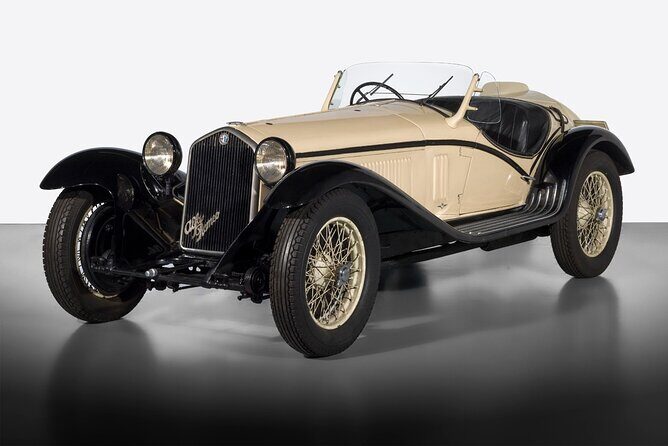
This is the main event, and it’s built like a “time machine” for car lovers. The museum is known for the presence of perfectly preserved showpieces such as a Bugatti, a Ferrari, and an Isotta Fraschini. Seeing those brands in a museum setting—rather than as photos online—makes the design details feel real and tangible.
You’ll also encounter a wider view of the car world, not just trophy cars. The museum uses original vehicles and contextual information to explain how the automobile changed from a transportation tool into a major cultural and technological force.
Here’s the practical takeaway: if you’re visiting for 3 hours, you can’t see every single car in detail. Use the chronology as your guide. Spend extra time on the eras that match your interests (early engineering, racing influence, postwar growth, or modern tech), and let the rest be a “broad scan” rather than a checklist.
Other museum experiences in Turin

Ayrton Senna at MAUTO: Motorsport Storytelling You Can’t Ignore
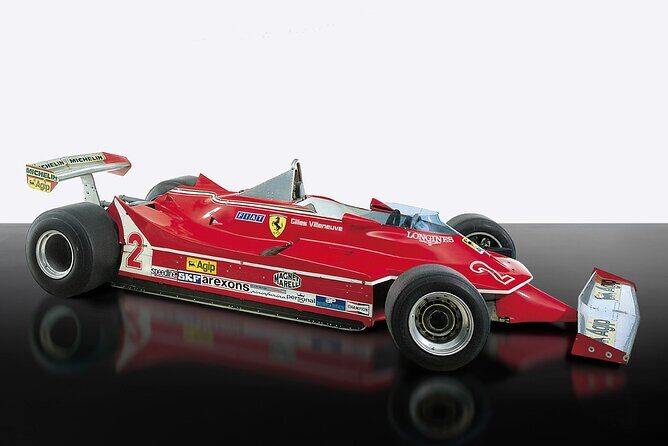
One strong draw is the exhibition space devoted to Ayrton Senna. The museum includes a dedicated area on him, connecting racing drivers to the evolution of performance and engineering.
I like this kind of exhibit because it gives context beyond speed. When the museum ties racing to the broader automotive story, you get a reason for why certain technologies mattered—and why fans care.
A practical note: some displays may feel more content-focused than gadget-heavy. If you’re hoping for lots of hands-on items or memorabilia across the Senna area, you might find the experience more exhibit-based than souvenir-based. Still, the storytelling component is the main point.
Turin’s Auto Economy Thread: Why FIAT Matters Here
A lot of car museums treat brands like separate islands. MAUTO makes them part of a Turin story. You’ll learn about the importance of FIAT (FCA) and how cars shaped the city’s economy.
That’s more than trivia. Understanding the local industrial motivation makes the historical displays click. The cars stop being just beautiful objects and start becoming evidence of real-world pressure: demand, manufacturing, labor, and innovation.
If you like museums that connect design to the people and industries that built it, this angle will feel satisfying rather than random.
Comfort and Food: Snacks Included, Meals Not
Snacks are included, which is a nice buffer during a few hours of walking and reading. But there are no meals included on this day, so you should plan food timing.
From what you can expect around the museum area, the cafeteria may not be the kind of place you’d trust as a full meal rescue. A safer strategy: eat before you go, or plan a longer stop after at the nearby Lingotto shopping area, where there are more reliable options.
Also keep in mind that the museum shop can be pricey. If you’re the type who normally buys a small souvenir after museum visits, I’d go in with that mindset so it doesn’t feel like a surprise bill.
Getting There (and Parking Reality Check)
The museum area is described as accessible by public transportation, and it’s near Turin’s metro line. One practical route is taking the metro to Lingotto and then walking a short distance.
Parking can be tricky, and it’s not the kind of place where you should count on a convenient spot right by the museum door. If you’re driving, expect some friction and plan extra time.
Since your tour includes private transportation, you’re partly protected from this problem—still, it’s good to know so you aren’t stressed if your plan shifts.
Who This Tour Fits Best (And Who Might Want Alternatives)
This works especially well for:
- People who want a structured, time-based museum visit around Turin’s auto story
- Mixed groups, because the museum is designed to hold attention across ages
- Anyone who likes cars and motorsport, including Senna-focused fans
It may feel less ideal if:
- You’re chasing very specific modern Ferrari/Lamborghini highlights and you’re extremely picky about exact models
- You expect a gadget-heavy, hands-on type of racing museum rather than a curated exhibition space
- You’re shopping-focused and plan to spend big in the museum shop (it can run expensive)
One more thought: at around 3 hours, you’ll want to prioritize. Go with a mental plan—pick the eras or brands you care most about, then let the rest be a satisfying overview.
Value for Money: Is $180.24 Worth It?
For a museum-only experience, €15 admission is modest. The bigger cost here is the tour package price, and that’s mainly paying for private transportation and snacks.
So when does this price feel worth it?
- When you value convenience enough to avoid sorting transit and timing on your own
- When group discounts apply to your booking
- When you want a low-stress schedule starting at 2:30 pm from Piazza Castello
If you’re comfortable with independent transit and don’t need door-to-door help, you could compare the cost of transport and admission separately. But if you’d rather spend your energy inside MAUTO instead of navigating the city’s logistics, this package is designed for that.
Quick FAQ Before You Book
FAQ
How long does the MAUTO Automobile Museum visit take?
The museum visit is listed at about 3 hours, with the full experience running about 3 to 4 hours total.
Is the museum entrance ticket included?
No. The entrance fee is listed as €15 per person, and you should plan to pay the museum ticket separately.
What’s included in the tour price?
Private transportation and snacks are included.
Where is the meeting point and what time does it start?
You start at Piazza Castello in Turin, with a listed start time of 2:30 pm. The activity ends back at the meeting point.
Is the tour offered in English?
Yes, it’s offered in English.
Does the tour run in any weather?
The experience requires good weather. If it’s canceled due to poor weather, you’ll be offered a different date or a full refund.
What’s the cancellation policy?
Free cancellation is available up to 24 hours in advance for a full refund.
Should You Book This MAUTO Tour?
Book it if you want an easier way to reach a top museum and you like a car collection that’s tied to Turin’s real industrial story. The private transport from Piazza Castello helps, the time window is well-sized for a first visit, and the Senna exhibit adds a motorsport angle beyond just brands.
Skip or rethink it if you’re ultra-specific about modern Ferrari/Lamborghini model lineups or if you prefer fully independent travel. In that case, you might enjoy visiting on your own and spending extra time exactly where your favorites are—without paying for private transport.
If your goal is a solid 3-hour afternoon visit with less hassle, this one is a strong, practical choice for Turin.